

 Dementia Support Line
Print and online publications about dementia: Full list
Here, you will find our full list of publications that you can download or order as printed copies.
Order dementia information
Order copies of our publications and resources about dementia by post using the online order form.
Find the information you need
Our extensive list of publications below is grouped within categories to make it easier to find the right information.
You can see the whole list of booklets and factsheets if you click the ‘Expand all’ option below. If you need an alternative format, we have a range of accessible resources, including Easy Read and different languages.
You can also download our catalogue (PDF) for full details of all our print publications, accessible resources and practical tools.
After a dementia diagnosis
We produce a range of publications including the following longer A5 booklets.
See our comprehensive booklet for anyone recently diagnosed with dementia:
See our guide that covers all aspects of caring for a person with dementia:
See our booklet for anyone with memory problems, including dementia:
Summarised and simplified dementia information:
Living with dementia and dementia care
Our range of A5 booklets include images, quotes from people affected by dementia and range from 28 – 64 pages. They cover different aspects of living with the experience and feelings of dementia.
The factsheets are A4 and provide more detail on individual topics. They are either 12, 16 or 20 pages. They are suitable for anyone affected by or interested in dementia particularly if you are caring for a person with dementia.
Guidance on the practical and emotional aspects of living with dementia
Guidance on key areas of supporting the person with dementia
Factsheets
- What is dementia? (400)
- PDF printable version
- Listen to an audio version
- Watch a British Sign Language (BSL) video version
- Beth yw dementia? / What is dementia? (400WEL)
- What is Alzheimer's disease? (401)
- PDF printable version
- Listen to an audio version
- Watch a British Sign Language (BSL) video version
- Beth yw Clefyd Alzheimer? / What is Alzheimer’s disease? (401WEL)
- What is vascular dementia? (402)
- PDF printable version
- Watch a British Sign Language (BSL) video version
- Beth yw dementia fasgwlaidd? / What is vascular dementia? (402WEL)
- What is dementia with Lewy bodies (DLB)? (403)
- What is frontotemporal dementia (FTD)? (404)
- Genetics of dementia (405)
- Medicines to help memory and thinking (407)
- Antipsychotic drugs and other approaches in dementia care (408)
- Learning disabilities and dementia (430)
- What is alcohol-related brain damage (ARBD)? (438)
- Rarer causes of dementia (442)
- Risk factors for dementia (450)
- Dementia and the brain
- The progression and stages of dementia (458)
- What is mild cognitive impairment (MCI)? (470)
Factsheets: Emotional and practical guidance
- Supporting a person in the later stage of dementia (417)
- Using equipment and making adaptations at home
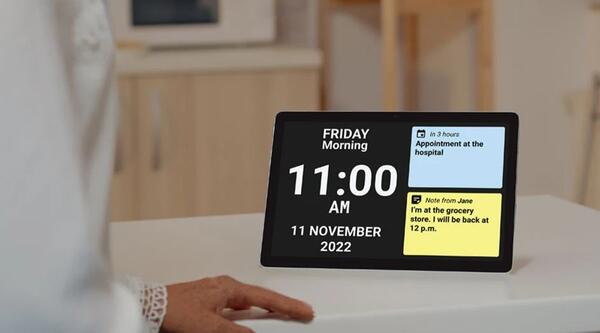
- Using technology to help with everyday life (437)
- Driving and dementia (439)
- Supporting a person with dementia who has depression, anxiety or apathy (444)
- Dental and mouth care (448)
- Going on holiday when a person has dementia (474)
- Supporting an LGBTQ+ person with dementia (480)
- Communicating with a person with dementia (500)
- Walking about and dementia (501)
- Continence and using the toilet (502)
- Supporting a person with washing and dressing (504)
- Grief, loss and bereavement (507)
- Aggressive behaviour (509)
- Eating and drinking (511)
- Sex, intimacy and dementia (514)
- Supporting children and young people when a person has dementia (515)
- Carers - looking after yourself (523)
- Understanding and supporting a person with dementia (524)
- Changes in behaviour (525)
- PDF printable version
- Listen to an audio version
- Newidiadau mewn ymddygiad / Changes in behaviour (525WEL)
- Supporting a person with memory loss (526)
- Changes in perception (527)
- Physical activity, movement and exercise (529)
- End of life care (531)
- Understanding denial and lack of insight (533)
- Understanding sleep problems, night-time disturbance and dementia (534)
Factsheets: Health and social care
- Assessment for care and support in England (418)
- Assessment for care and support in Wales (W418)
- Assessment for care and support in Northern Ireland (NI418)
- GP support after a dementia diagnosis (425)
- Respite care in England (462)
- Respite care in Wales (W462)
- Respite care in Northern Ireland (NI462)
- Hospital care (477)
- Urinary tract infections (UTIs) and dementia (528)
- Paying for care and support in England (532)
- Paying for care and support in Wales (W532)
- Paying for care and support in Northern Ireland (NI532)
Factsheets: Legal and financial matters
- Benefits for people affected by dementia (413)
- Council tax (414)
- The Mental Health Act 1983 (459)
- Mental Capacity Act 2005 (460)
- Advance decisions and advance statements (463)
- Lasting power of attorney (472)
- Enduring power of attorney and controllership (NI472)
- Personal budgets (473)
- Direct payments (NI431)
- Deputyship (530)
- Financial and legal tips in Northern Ireland (NI467)
Tools
Our range of support tools provide simple ways to overcome difficulties associated with dementia.
These include the A5 symptoms checklist, for recording symptoms, and the A4 booklet My appointments, for keeping track of appointments. Our credit card size helpcards can be used when out and about and our A4 patient profile tool This is me® helps to share details about a person with dementia.
- Symptoms checklist (78DDch) – 2 pages
- My appointments (923) – 32 pages
- Helpcards (1561, 1562, 1563, 1564)
- This is me (1553) – 6 pages
Please visit our online shop for more books and booklets.
Publications catalogue and order form
Read online, download or print our catalogue for full details of all our publications and practical tools. Use our online order form to request items in the post.
Read more about how we produce information on dementia and how you can help.



See our one page summarised helpsheets covering 10 key topics on dementia: