

 Dementia Support Line
Recruiting and involving people affected by dementia in your work
When commissioning or producing dementia services, you need to recruit people affected by dementia to give their opinions. Find out who to involve and how to recruit them.
- You are here: Recruiting and involving people affected by dementia in your work
- Consent and capacity of people with dementia
- Cultural sensitivity and awareness
- Managing risk, safeguarding and concern
- Remuneration and reward for participants with dementia
Who do you want to learn from, and why?
It may help save time and resources –and get you more valuable results– to plan who, where, why and how you want to find people to recruit into your study.
The pages in this part of the guide are to help you to do this.
You may need to use different methods of outreach and communication to contact different groups.
Who can help you find out what you want to know about - your 'research question'?
What kind of data are you collecting?
- For quantitative research, the sample of people with dementia you want to find out about should be chosen at random. Larger numbers are needed to build a representative picture.
For qualitative research, you are looking to understand subjective experience, so you want a person living with dementia who also has particular characteristics and/or experiences.
It's not a numbers game, so you may choose to have only a few, or even just one or two, people in your sample of people with dementia.
Working with people with dementia
When recruiting people with dementia for qualitative and quantitative research, you should ensure opportunities are open to diverse range of people.
It's important that both current users of your service and people who are not using your service are included. The latter can be just an insightful - perhaps they are unaware of the service, or they perceive it as not able meet their needs? Are there institutional barriers, such as lack of cultural sensitivity or inclusive culture which lead them to delay or avoid using the service?
Some people living with dementia are carers themselves and may be supporting others with dementia.
Working with carers
It is important to speak with the person with dementia and enable them to make the decisions they can about giving feedback and getting involved.
Carers should be invited to give feedback on services and experience of the person with dementia
the service should be aware that carer interests may not be the same as the person with dementia, and of the need to balance the interests of carers and people with dementia.
The Triangle of Care sets out good practice and self-assessment standards to help hospital, and other settings, to work with carers to understand the experience of the person with dementia.
Important sample considerations
Beware of getting a 'convenient sample' of only the people easiest to reach, regardless of whether they actually have any relationship to the sort of experience you are trying to find out about.
For example, staff and volunteers may also be carers or living with dementia, and their experience is valid, but given their connection to the service, their experiences may not reflect those of people less connected.
Be cautious about relying on a sample made up of service user volunteers. They may be convenient and keen, but do they have the right sort of characteristics or experiences? At a minimum check that they do, rather than just doing tokenistic research with 'the usual suspects'.
Look out for the 'saturation point' to know you have enough responses. You have reached this when you start to find repetition in data you are collecting, to such an extent that you realise you're not getting any new insights/different responses. At this point you have enough data to answer your question.
When planning your recruitment group, you could ask yourself:
- Do you want to be 'purposeful', that is to recruit people with dementia who have specific characteristics or experiences that will enable you to fully answer your research question?
- Do you want the 'maximum variant' or most diverse range of people who have relevant characteristics, lived experience or insights to bring to your research?
- Do you want your sample to include people who deviate from your typical service user?
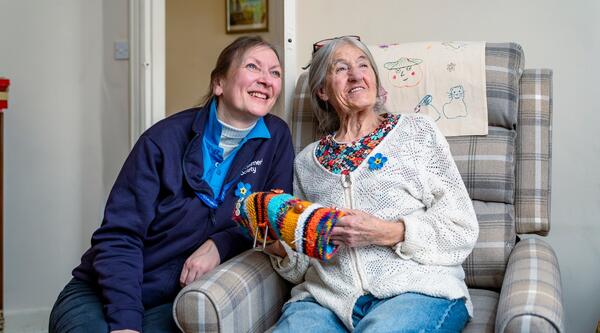

The symptoms of dementia may limit the person with dementia's ability to recall their feelings and experiences from hour to hour and day to day.
If this is the case, they may not be able to tell other people everything about what's happening and what they would like to be improved.
A 'proxy' is a person who knows the person with dementia well, is able and willing to provide information about them.
The proxy needs to have good, current knowledge so that they can share what they have heard and observed. This can be helpful.
Consider feedback about experience/quality of life from proxies or carers very carefully. Research has shown that often proxies/carers perceive quality of life and experience very differently to people with dementia, often more negatively.
Feedback may reflect the proxy or carer's needs and quality of life, rather than what matters to the person with dementia.
This underlines the importance of involving people with dementia directly, using dementia-friendly methods and environments, wherever possible, not just talking with others about them.