

 Dementia Support Line
Real stories
Getting diagnosed and treated for cancer showed me how far we have to go in dementia care
Anita Goundry reflects on the contrast between the experience of being diagnosed with cancer and her long, uncertain journey to a dementia diagnosis. The differences highlighted in her story highlight the need for ambitious approaches to dementia diagnosis, care and support.
Why do we accept such long wait times for dementia support?
In the time it took me to get a dementia diagnosis, I was diagnosed with ovarian cancer and skin cancer, received treatment for both, and recovered.
Whilst cancer and dementia are different conditions, looking back on my experience, I come back to the same question: Why do we accept that people with dementia should wait so long for a diagnosis and struggle to get support, when we wouldn't accept the same for many other serious health conditions, like cancer?
Dementia is the UK’s biggest killer and more and more people are developing it. But too many people like me are facing long delays in diagnosis and not getting the support they need.
The first barrier is getting the diagnosis
When I was 50, I was diagnosed with mixed dementia, but it took four years to get there.
I knew something was wrong. I was experiencing changes like memory problems, mood swings, losing my balance and forgetfulness. But despite repeatedly raising concerns, I was told that I was "too young for dementia".
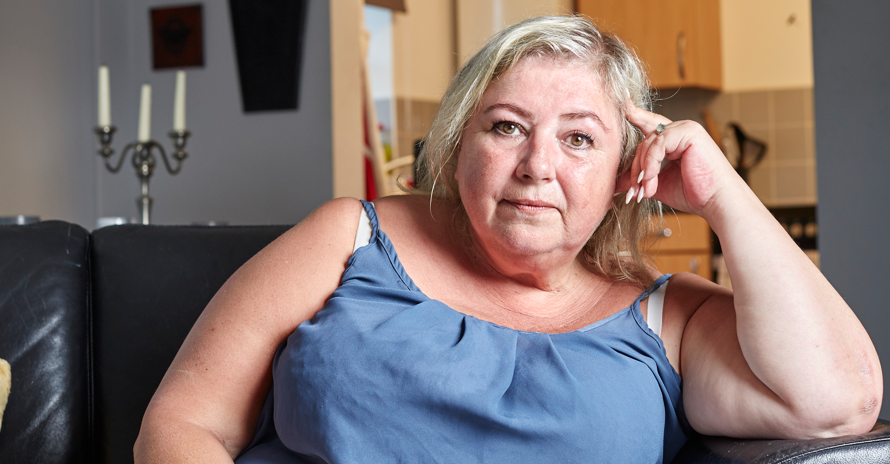
I went to the GP, because I was so scared - but my symptoms were attributed to menopause, stress, and psychosis. I was even dismissed as a hysterical hypochondriac. This was despite having cared for my mother who lived with dementia, and so having a good understanding of what I was going through from first-hand experience.
GPs are often the first point of contact for someone worried about their memory, yet they generally receive very little training on dementia. This is not a criticism of individual clinicians. Dementia is complex and can present differently in different people, but it does raise questions about the need for more training and support in recognising dementia, particularly in younger people.
All of this felt very different to my experience of receiving a cancer diagnosis, where there was a clear sense of urgency to minimise waiting times and where I knew there were established referral pathways.
At every stage, the system seemed designed to move quickly from concern to cancer diagnosis and treatment. By contrast, my dementia diagnosis journey was marked by uncertainty, long waits and a lack of clear direction.
The problems with dementia support do not stop after diagnosis
Receiving a diagnosis should have been the beginning of support, but to me, it felt like the end of the road.
In the six years since my dementia diagnosis, I have had only one follow-up appointment.
And that appointment only happened because a mental health nurse agreed to see me when nobody else would. I know I should receive an annual dementia review, but I have never had one and no one has ever followed up with me.
I have received no NHS dementia support and no social care support. Almost everything I have accessed has come through services linked to cancer care or stroke care, rather than dementia. Would we really consider that acceptable for someone diagnosed with cancer?
From my own experience, I can tell you that cancer patients are typically given a clear pathway, regular follow-up appointments and named contacts - they know where to turn if they need help. Too many people with dementia are handed Do Not Resuscitate forms, information on power of attorney, told to make their Will, and then left navigating an incredibly complex system on their own.
Where you live shouldn't make a difference to your care options
Even when support exists, whether you can actually access it often depends on where you live. Young-onset dementia services can be hard to find, especially in rural areas. Living in County Durham, when I tried to access my local memory clinic, I was told it wasn't able to cater for people under 65.
There also wasn't any local support for people with young-onset dementia. There is a young-onset group in County Durham, but it's based so far away that getting there without a car is incredibly difficult, turning what should be a support group into a journey of more than two hours each way.
When you're already dealing with the uncertainty and challenges of dementia, that's a huge barrier. It leaves people like me feeling forgotten and excluded. Support may exist, but if you can't realistically get to it, it might as well not be there. Access to support shouldn't depend on your postcode.
Dementia deserves the same ambition as cancer
I am not arguing that dementia care should look exactly like cancer care. These are fundamentally different conditions, but we should expect the same level of ambition and the improvement in cancer outcomes shows that transformation is possible.
Cancer outcomes improved because successive governments over recent decades made it a priority, set clear expectations and invested in improvement. People affected by dementia deserve the same.
My experience should not be exceptional. If cancer has shown us what is possible when a condition becomes a national priority, the question now is whether we are prepared to bring that same determination to dementia.
We should expect faster diagnosis. We should expect clear follow-up care. We should expect support after diagnosis. We should expect people to know where they can turn when they need help. Most importantly, we should stop accepting a system where people with dementia are left to fight for support that should already be there.
No one should have to wait four years for answers, and no one should be left feeling alone after receiving a life-changing diagnosis.
A diagnosis should be a lifeline
We believe that everyone with dementia should receive a diagnosis and care plan and, where appropriate, begin treatment - all within 18 weeks after being referred by their GP. Join us in demanding better.