

 Dementia Support Line
Real stories
The importance of person-centred dementia care that embraces someone’s culture
Faith Walker has witnessed the best and worst of care while supporting her mother, and she’s passionate about never losing sight of the person with dementia.
Read this story in Welsh
‘I can’t find the words sometimes to explain the depth of pain, looking at someone who lived life to the fullest and was such an amazing person,’ says Faith Walker of her mum, who has Alzheimer’s and vascular dementia.
Faith finds it difficult to recount some of her more troubling experiences. However, she’s determined to highlight the best and worst of the care that her mum has received since being diagnosed.
‘I’ve seen it when it goes so wrong, and so right,’ says Faith, who lives in Cardiff, south Wales.
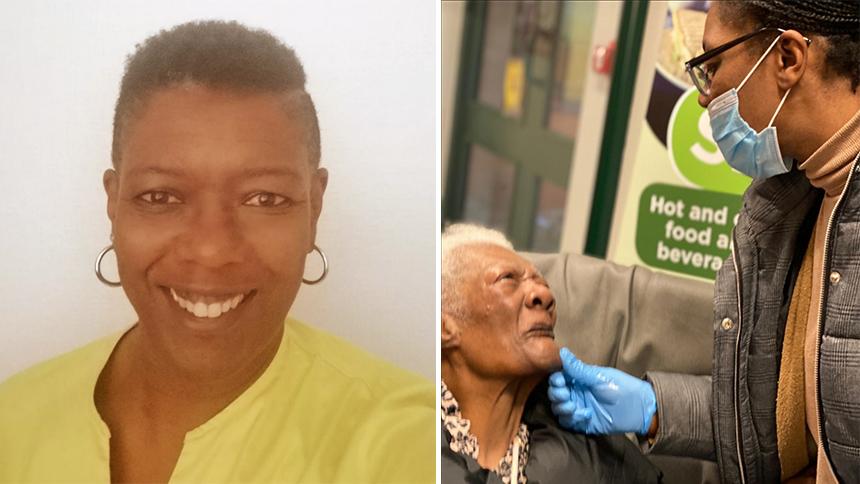
This is also where her mum Ivy – known by all as Mrs Walker – is thankfully now happy and settled.
‘My mum is a very strong lady, and there’s a strength in me somewhere that’s pushing me to tell my story. Maybe it’s from my mum. It’s what she would want.’
Close community
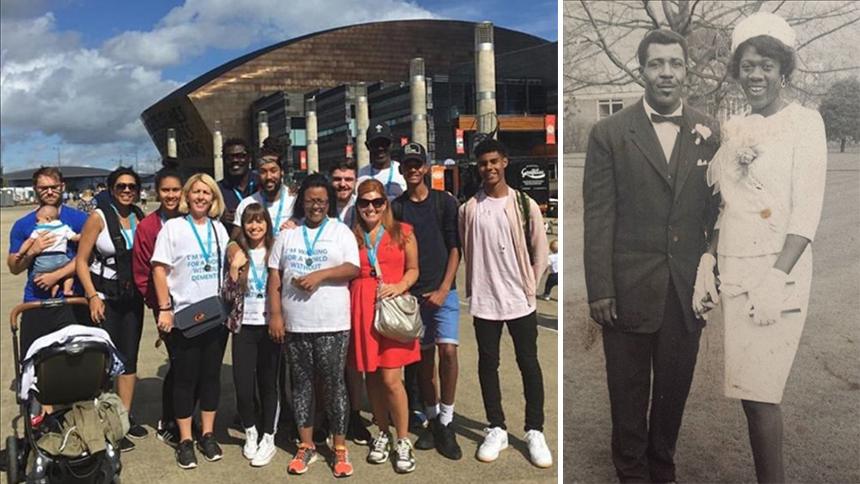
Now 80, Mrs Walker grew up in Jamaica before coming to Port Talbot in south Wales in the 1960s.
‘My parents were both from Jamaica, but they met and fell in love in Port Talbot,’ says Faith. ‘It’s where I was brought up, in a close-knit community of Jamaican, Welsh and Irish people.
‘Yes, there was racism, but there was also kindness and love.’
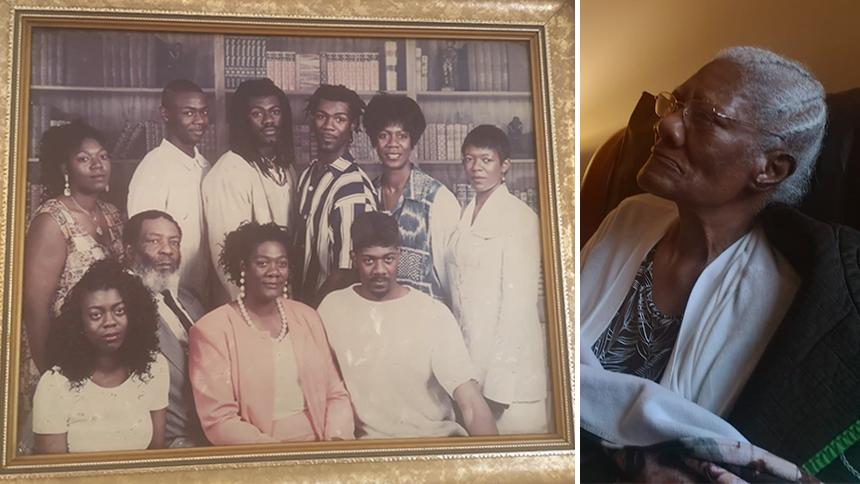
Faith is one of 10 children, many of whom represented Wales at sport, while the next generation have enjoyed successful working lives.
‘That shows the depth of my parents’ love and resilience, and my mum’s influence on the grandchildren, who she loved so much,’ says Faith, who also recalls her mum’s brilliant time management skills.
‘She’d come and watch our games and still manage her home so efficiently. We were all immaculate, well-mannered and had beautiful, healthy food to eat.
‘We all think we were her favourite because she had a way of knowing each of us and loving us all equally. My parents were about education, health, love, care and being your best self.’
Respect and rapport
Faith first noticed that something was the matter when her mum started to become less organised and efficient.
‘I’m thinking, “Oh my gosh, Mum’s forgetting dates. Something’s not right,”’ she says.
Mrs Walker visited a doctor and memory clinic, before receiving a home assessment from a psychiatrist. In 2014, they diagnosed her with vascular dementia and Alzheimer’s.
‘I went into autopilot: “What can I get into place?”’ says Faith. ‘The community mental health nurse put us in touch with an occupational therapist, who was an absolute godsend.
‘She gave Mum respect and didn’t treat her like she was ill. She connected with Mum, built a rapport and put her at ease. It was textbook – better than textbook.’
Big decline
Mrs Walker’s husband had died many years earlier and she was now a carer for her fiancé. But the death of her own mother and partner in quick succession led to a big decline in her health.
‘It was grief, plus dementia, plus the lack of routine as a caregiver that made everything accelerate,’ says Faith.
‘She’d say, “I’m losing my mind and I don’t know what to do.” That was heartbreaking. She was petrified, it was horrible.’
After a fire at home, Mrs Walker went to stay with Faith’s sister in Germany, then went to live with Faith herself.
‘She was trying to be independent and formidable, but didn’t realise she was putting herself at risk,’ says Faith.
‘Carers came morning, lunch and evening, as her support needs became greater. Then she went into a care home. That’s when the nightmare really began.’
Hell to heaven
In August 2016, Mrs Walker moved into a large care home in Port Talbot, which it soon became clear couldn’t meet her needs.
‘They never followed her care plan,’ says Faith. ‘They were supposed to encourage her to eat, but they gave her food and walked away, then said she wasn’t eating.
‘They were short-staffed and wanted her to stay still, so they increased her medication. When she was soiling and trying to clean herself, they used the word “disgusting.”’
The following January, Mrs Walker was taken to hospital for a mental health assessment.
Faith refused to let her mum be assessed in a hospital unit that had cases of norovirus, so Mrs Walker was transferred to a psychiatric hospital in nearby Tonna, Neath.
‘The nurses there were friendly and smiling. They were reassuring Mum,’ says Faith. ‘It was like going from hell to heaven.’
Dementia experts
No nursing home was available that could fully meet Mrs Walker’s needs, and she stayed at Tonna Hospital for the next four years.
‘Mum shouldn’t have been there, but in the time she was there, they made it the best they could,’ says Faith.
‘They met her needs, cared for her, loved her. They tried different approaches, like creating a mock living room with family photos.
‘They weren’t just dementia friendly, they were dementia experts.’
Faith was especially happy to see the hospital recognising and embracing her mum’s cultural needs.
‘All the staff were white, like in the care home, but they listened and wanted to learn,’ she says.
‘They had conversations about Jamaica as part of life story work. Occupational therapy activities included making dumplings, food that Mum could identify with. They told us to bring in CDs of music that Mum liked.
‘They created a safe environment where Mum felt she could belong. Mum was at the centre of her care, and the family was included in the process. It was amazing.’
Culturally competent
Last year, following pandemic restrictions on family visits, Mrs Walker was placed on an end of life care plan. Faith and the family were allowed in, one at a time, to say goodbye.
‘I looked at Mum and in Patois she said, “I’m not ready to go yet,”’ recalls Faith.
‘The next day I came in and she was sitting up in bed talking! The nurse said it was the power of love.’
Mrs Walker eventually came off the end of life care plan, before contracting and recovering from COVID. She now lives in a nursing home in Cardiff, a three-minute walk from Faith, having been discharged from hospital in June under NHS continuing healthcare.
‘The staff are beautiful – really diverse and culturally competent. Mum is so chilled!’ says Faith.
Faith is passionate about addressing health and social inequality, and promoting the importance of high-quality dementia care. She has supported organisations such as Diverse Cymru and Carers Trust Wales with research, resources and reports.
She says, ‘Person-centred care is paramount to meeting someone’s complex and cultural needs, so never lose sight of the person who is living with dementia.’
Donate
Your support means we can ensure more people with dementia receive care from the very best.