

 Dementia Support Line
Real stories
Research is building a more complete picture of dementia to benefit everyone
By involving people from all communities, the CARE Network study is finding out how dementia awareness and needs vary so that people can get better support.
It’s important that research reflects the experiences of people from all communities,’ says Christina Israel.
That’s especially true in dementia research, where culture, lived experience and different perspectives all have an important part to play.
Christina is Managing Director of 60 Up, a community interest company supporting older people in south London. She’s also a public and patient involvement (PPI) volunteer with the CARE Network study.
This study is finding out how dementia awareness and support varies across ethnic and faith communities. PPI volunteers help the researchers keep their work relevant to people’s real-life experiences.
Enduement Ruvon Adiohwo, another volunteer, says, ‘Dementia affects individuals, families and communities in profound ways.
Research is essential for improving understanding, enhancing care and strengthening support services.
‘By contributing my perspective, I could help ensure that community voices are reflected in future policies, services and interventions.’
Short surveys for dementia insights
The CARE Network study is looking for people aged 40 and over from all communities to take part. This includes people who don’t have problems with their memory or thinking, as well as those who do.
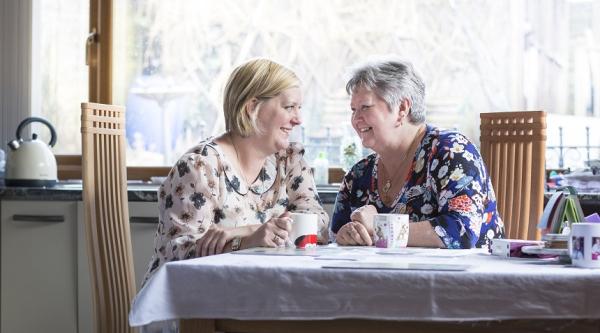
Participants complete a short online survey every six months for 10 years.
From their responses, researchers at King’s College London will build the evidence and insight needed to improve dementia care and support for everyone.
Zunera Khan, who leads the study, says, ‘Dementia does not affect all communities equally in terms of experience, access to services, or outcomes.
Without the voices of diverse communities, there is a risk that services and research will continue to reflect only a partial understanding of need.
‘The CARE Network is committed to changing this by ensuring that underrepresented communities are not only included but actively involved in shaping the future of dementia research and care.’

Zunera and Kamara
Satisfying and enlightening to take part
Jakki Levene, another CARE Network PPI volunteer, got involved with research due to her experience of supporting both her parents.
She cared for her mother, who had dementia, as well as her father when he had cancer.
‘I decided to get involved with as many things as I possibly could, to do whatever I can to help in research,’ says Jakki.
I find it very satisfying, very enlightening. I’m learning new things every time, sometimes from people with whom I wouldn’t normally have contact.
Taking part in a range of studies has also helped her acknowledge the emotional and psychological impact of caring.
‘It helps to be aware of that,’ she says. ‘You can reconcile how you feel about it and deal with it in that way.’
A genuine difference for dementia research
Kamara McLeish Evoloko, CARE Network Study Co-ordinator, has no doubts about how vital volunteers are to dementia research.
‘Participation makes a genuine difference,’ she says.
By sharing your experiences and perspectives, you help shape future research, services, and interventions so that they are more relevant and inclusive for all communities.
Enduement says, ‘It is an opportunity to have a positive impact on the lives of people affected by dementia.’
Christina agrees, ‘I’d encourage anyone to give it a try. It’s interesting, enjoyable and a chance to make a real difference.’
Take part in dementia research
Research is only possible thanks to the people who participate. If you would like to get involved in dementia research, we can support you.