Dementia Support Line
Mental wellbeing
Find out how Alzheimer’s Society can support your mental wellbeing.

Helpline and self-help tools
Any volunteer can access a free and confidential helpline and online self-help tools, provided by Bupa.
The helpline
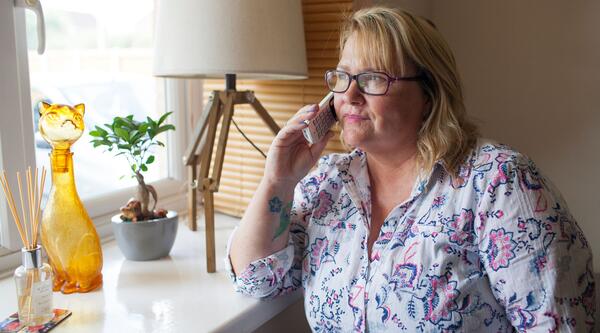
Call Bupa on 0800 269 616 for a free and confidential chat. They are available 24 hours a day, seven days a week.
You can talk to a Bupa counsellor about any worries or issues before they become bigger problems. You can speak to a Bupa counsellor about almost anything, such as:
- Stress
- Bereavement
- Coping with change
- Financial worries
- Anxiety and depression
- Substance misuse
- Family issues
- Legal concerns
Legal and financial specialist helplines will only provide factual information and signposting to help you make an informed decision. They can’t provide advice.
After listening to you, the counsellor may provide immediate support over the phone or tell you about further support options.
Bupa won’t tell us, or anyone else, that you’ve called, unless they think you, or someone else, may be at risk and are legally obliged to do so. If this be the case, they’ll do everything they can to talk this through with you first.
Self-help information and tools
Visit Bupa’s EAP for free and unlimited access to helpful factsheets and practical tools that can help you prevent or manage any future issues before they affect wellbeing.
External support
We’ve put together a list of external organisations who offer support which you may find helpful. It’s not exhaustive but you may find using it makes it easier to find or access the wellbeing support you need.
Policies and guidance
Alzheimer’s Society has policies and guidance designed to keep all of our people safe and healthy.
If these don’t cover what you’re looking for, speak with your volunteer manager or contact the Volunteering Experience team and they’ll be able to tell you what other policies and guidance are available.
Volunteer manager support
It’s important you feel confident, valued and equipped to carry out your role at the Society and understand the impact and difference you make to people living with dementia. Your volunteer manager is there to help make sure this happens.
If you have concerns or worries unrelated to your volunteering and it’s beyond the scope of your volunteer manager’s role, they will check how you’re doing on an informal and more regular basis.
Formal support meetings sit alongside the more frequent and informal conversations mentioned you have with your volunteer manager. They are an opportunity for you both to discuss how you are doing and how your volunteering is going. They’re also a great opportunity for you both to talk about your wellbeing and any concerns or issues you may have.
If you’re not sure when your next support meeting is happening, ask your volunteer manager.
Volunteer Advisory Panel Wellbeing Leads
The Volunteer Advisory Panel (VAP) is a strategic group of 12 volunteers who are help the Society’s approach to volunteer engagement and the volunteering experience. Two members of the VAP are designated as Wellbeing Leads. Their role is to help us think about how best we can support the wellbeing of all volunteers.
Optional e-learning
To support you with your wellbeing you can complete optional e-learning on MYV-Learning. Topics you might find useful include:
- Developing Resilience
- 5 Ways to Wellbeing
- Managing Stress
- Lone Working and Personal Safety
- Personal Development – Practicing Patience 1.0
You’ll need to email [email protected] and ask for the modules to be assigned to your MYV-Learning account or you can ask your volunteer manager to do it on your behalf. You can find your MYV-Learning account on this portal.
Volunteering support
The Volunteering Experience team is there to support volunteers and volunteer managers at all parts of the volunteering journey from recruitment to ongoing support.
While your volunteer manager is your first point of contact, the Volunteering Experience team is also here to support you. You can contact the team by email at [email protected] or by phone on 0300 222 5706.