

 Dementia Support Line
Information
Hidden disabilities and dementia: Can a sunflower lanyard help me?
Sunflower lanyards have become a popular way to recognise if someone has a non-visible disability, such as dementia. But are lanyards the best way to get support and is there an element of risk for people with dementia?
What is a sunflower lanyard?
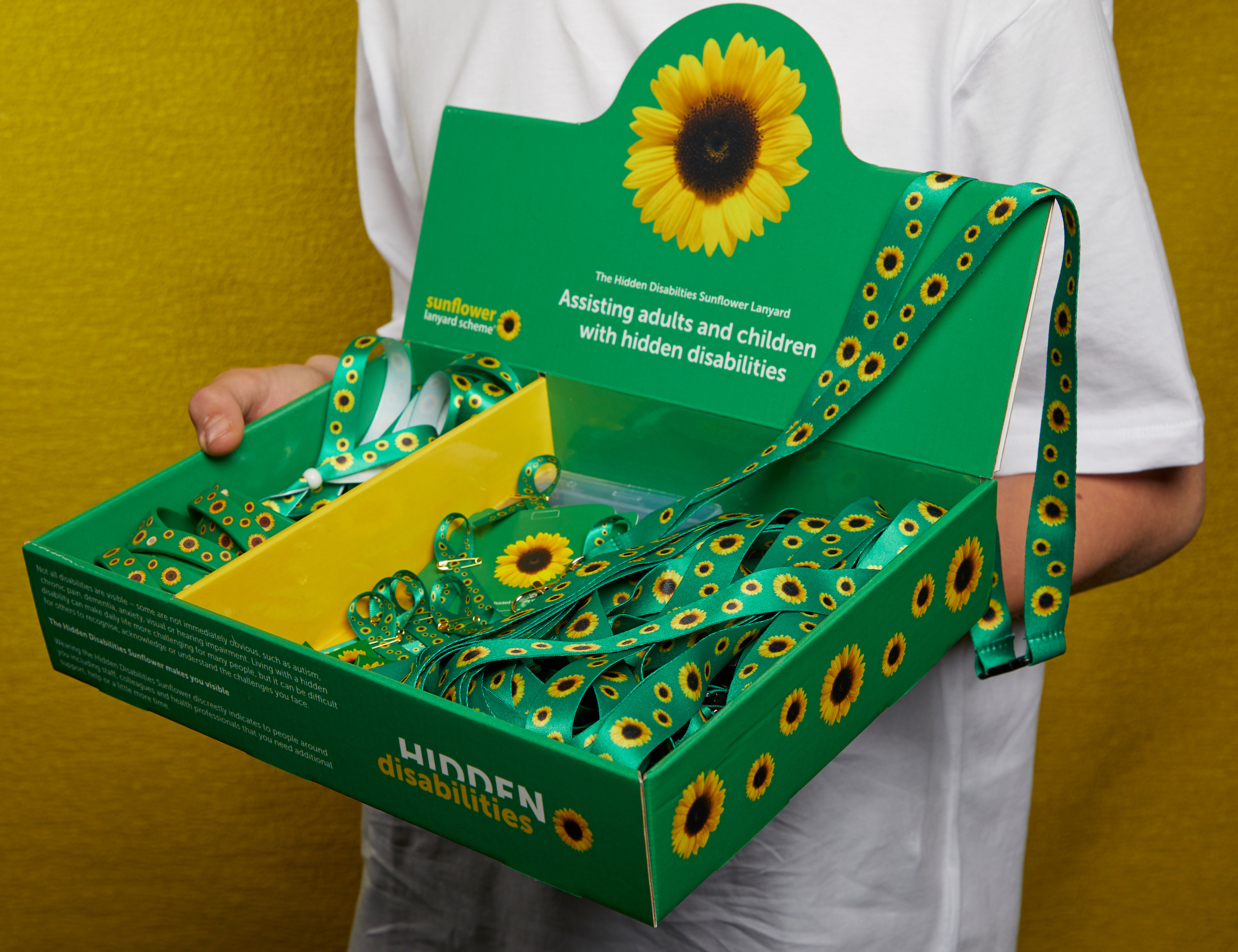
Many businesses and organisations have been taking part in the sunflower lanyard scheme for non-visible disabilities over the last decade. In 2016, a UK airport first introduced green lanyards with a sunflower design to discreetly signal to staff that the wearer, or someone with them, may need more time and support while travelling. Over 300 airports are now part of the Hidden Disabilities sunflower network.
Since its launch, businesses from every sector support sunflower lanyards and it became a symbol for non-visible disabilities, conditions or chronic illnesses.
How might sunflower lanyards help people with dementia?
People with dementia , or their carer, can use the Hidden Disabilities sunflower to tell people who are aware of the sunflower that they might need extra help, understanding, or just more time when they are out and about.
The sunflower symbol is there to let people know that a person may need support, and to trigger a simple question: ‘How can I help?'.
Why wearing the sunflower lanyard might not be the right choice for someone
While many are benefitting from hidden disability lanyard schemes, some people are wary of potential risks, particularly in non-secure or unrestricted environments.
Here are a few reasons why wearing a lanyard may not be a solution for everyone.
1. Lanyards could create a safety issue
People with dementia can sometimes face stigma and exploitation, which may put them at risk.
There is a danger of vulnerable adults or children becoming more identifiable when wearing a lanyard, badge or wristband. This is especially the case if unaccompanied or in public areas, which are not secure.
2. People without lanyards may need support too
We don't want people to only rely on looking for lanyards. People with hidden disabilities who aren't participating in the scheme - either because they are not aware of it, or do not want to wear one - might be affected by this.
A person shouldn't have to make their hidden disabilities visible to be supported. Customers should be supported on an individual basis and not grouped or labelled. Not everyone's support needs are the same.
3. This lanyard scheme isn’t known by everyone
Since its introduction, the sunflower lanyard has become more recognisable. But not everyone will know what it means.
A hidden disability lanyard scheme is only as good as people’s awareness. You can find out which businesses are part of the Sunflower network, meaning they've made a commitment to support people with invisible disabilities by searching the Hidden Disabilities map.

Deciding if wearing the sunflower lanyard is the right decision
It's an individual’s decision whether they find the lanyard scheme useful. Many people with dementia really like their sunflower lanyard and find the scheme helpful.
The person with dementia should always be given the choice over who they reveal their diagnosis to, or whether they mention it at all. It is important to consider the ethical and privacy issues of identifying a person as someone living with dementia, as there are concerns around marking them out as vulnerable or an ‘easy target’ for scammers.
If the person has capacity to consent, it is important they make their own choice after weighing up the pros and cons of the scheme. They can then decide what is best for them.
Alzheimer's Society wants businesses and organisations to help customers as individuals. We support more awareness and training about dementia and other complex conditions.
What do we encourage businesses and organisations to do?
If businesses are part of the sunflower network, we encourage them to become Dementia Friends too. Our Dementia Friends initiative helps individuals and organisations learn more about dementia and take action to support those affected by dementia in their community.
We also have specialist training courses for businesses and individuals, as well as sector-specific resources for organisations.
Businesses and organisations should make changes that will help people with dementia. Under the Equality Act 2010, organisations must make reasonable adjustments for both customers and employees. Organisational improvements could also include listening to customer feedback or changing environments.
Free helpcards for people with dementia or memory problems
Our Helpcards are a discreet way for people with dementia to get assistance more easily when out in the community. As they are kept in a pocket, wallet or purse, the person can decide when and where they want to show them. The cards are great for helping someone with dementia to maintain their independence while staying safe.
Don
saysThe green lanyard system is fantastic, we fly about four times a year, mainly through necessity. A friend who volunteers at Heathrow Airport told me about it, it is not widely advertised. However, flying out of of LHR last time I couldn’t understand why everyone was being so helpful until I remembered my wife was wearing the lanyard. When someone doesn’t have any outwards signs of dementia, and is getting a bit confused, it signals to others to be a bit more patient. It would be great if everyone was patient with everyone, but that is simply not the case. I am sorry it only works in the UK, and would love it to be more internationally recognized, as we are all flying somewhere.
Jennie Fletcher
saysI have worn my lanyard for a couple of years now and it is recognised in quite a few airports abroad. J. F. K., Florida, Barbados and Jamaica to name a few. I admit that my husband approached a member of staff in Jamaica but once he mentioned the lanyard my journey was made simple. Even flight crews are beginning to be aware of the lanyards.
I will say that even without the lanyard, I have been given great treatment once my husband has mentioned that I have a problem.
There are people who don't like others to know that they have a problem but.... If you need help, for goodness sake ask for it.
Brian English
saysA good idea which should be supported .
Mick
saysDon't you think it might have proved beneficial to have shown what this sunflower lanyard actually looks like?
GRAHAM ASHLEY
saysWhere can I get a lanyard for my wife?
Don
saysFrom the airport service desk, although I ordered it in advance.
Grace Watson
saysI picked a lanyard up for my husband from Sainsbury’s, I had a badge made with his name also my contact details as when we are out he does wander.
He is very happy to wear it it makes him feel more secure but he won’t tell anyone he has dementia Lol
I think these lanyards are a good idea and gives us both peace of mind
K
saysSainsbury's!
Debbie
saysI got mine from sainsburys supermarket .just ask at customer services for one
Teresa Ashton
saysHow will we recognise the lanyard when there are no pictures on the website - or have I missed it?
Thanks
Alzheimer's Society
saysThank you for your feedback. We have added a close up of the lanyard now.
Alzheimer's Society content team.
Janet
saysI am aware that the wearing of a lanyard in a car in which there is an accident and the air bags go off, can puncture the chest of a person. It may be worthwhile considering this. Otherwise i think it an excellent idea.