

 Dementia Support Line
PhD student Florence Wedmore
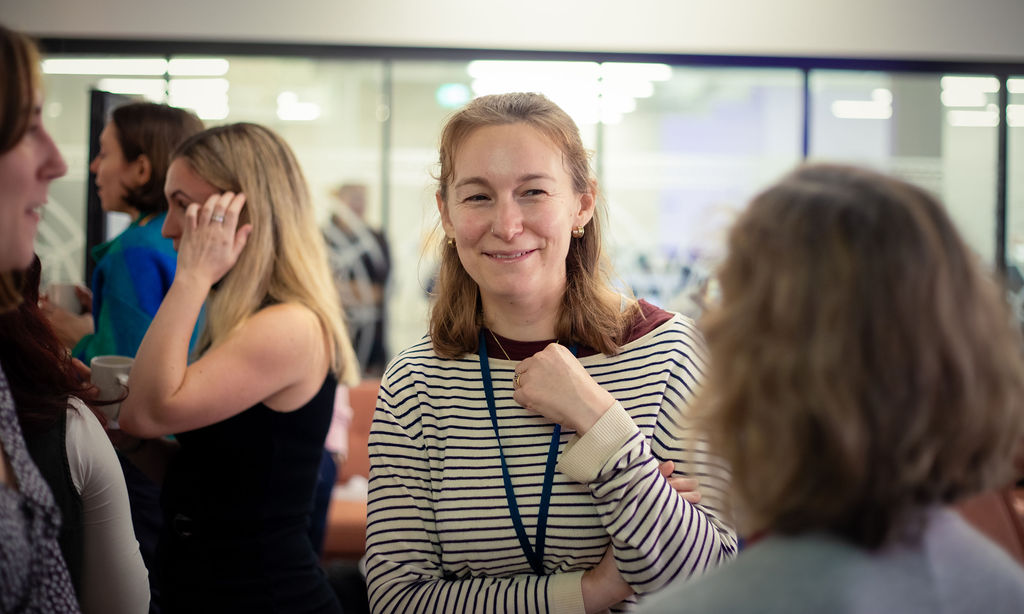
Meet Florence Wedmore, supervised by Professor Adam Gordon at Queen Mary University of London. A PhD student at our I-CARE Doctoral Training Centre, Florence is exploring how hospital care for people living with dementia can be improved while reducing its impact on the environment.
Florence's project is focusing on:
How hospital care for people living with dementia can be both high-quality and environmentally sustainable
Tell us about your research
Before starting my PhD, I worked as a hospital doctor specialising in the care of older people. Many of the people I looked after were living with dementia, and I saw how hospital care wasn't always organised in a way that worked best for them or for the people caring for them.
I also worked through record-breaking summer heatwaves and saw the impact that extreme heat could have on hospitals and on the health of the people I was looking after, particularly people affected by dementia. This really highlighted to me how important it is that we tackle climate change while continuing to provide high-quality healthcare.
My research will look at the environmental impact of hospital care for people living with dementia and explore how we might reduce this while also improving people's care.
There may be changes we can make that are better both for people with dementia and for the environment.
One example is the use of incontinence pads in hospital. Sometimes people living with dementia may be given a pad even when they would normally be able to use the toilet. Relying on pads rather than supporting someone to use the toilet can be distressing and may mean they move around less, which can contribute to reduced mobility and muscle strength. Supporting people to continue using the toilet where they can, could therefore improve their experience and independence while also reducing the use of disposable products.
This is just one example. Through my PhD, I hope to identify other opportunities to provide care in ways that are better for people living with dementia while also reducing the healthcare system’s environmental impact of hospitals.
Healthcare is changing as the NHS works towards becoming net zero. However, there has been relatively little research looking specifically at what more environmentally sustainable healthcare could mean for people living with dementia. Hospital care for people with dementia needs to be tailored to the individual, as everyone's circumstances and needs are different. My research will explore how we can make care more sustainable without losing sight of that person-centred approach.
How will this research impact people living with dementia?
First and foremost, I hope my research will help improve hospital care for people living with dementia.
I want to identify changes that can improve people's quality of care and quality of life while also reducing the environmental impact of healthcare. I also want to help make sure the needs of people living with dementia are considered as NHS services change to become more environmentally sustainable.
In the longer term, I hope my research can contribute to efforts to reduce the environmental impact of healthcare. Climate change poses risks to people's health, particularly people living with dementia, so making healthcare more sustainable has the potential to benefit people now and in the future.
What excites you most about your PhD journey?
I'm really looking forward to being able to produce research that brings together two issues I care deeply about: improving care for people affected by dementia and tackling climate change.
Having worked as a hospital doctor, I've seen first-hand some of the challenges people living with dementia and their carers can face in hospital. I'm excited to explore how we can improve those systems of care while also making them more sustainable.
How does it feel to be part of the I-CARE Doctoral Training Centre?
I'm really grateful to Alzheimer's Society for funding my research and training.
Being part of the I-CARE Doctoral Training Centre means I'm based at a leading institution, supported by experienced supervisors and part of a cohort of PhD students who bring different perspectives and experiences. Being able to learn alongside them is a real advantage.
Another important part of the Doctoral Training Centre is being connected with people affected by dementia through Patient and Public Involvement and Engagement (PPIE). Their lived experience will help shape my project from the beginning, making sure the voices and priorities of people affected by dementia remain at the heart of my research.
Research on integrating dementia care
This Centre’s research focuses on ways to provide better care and services for people with dementia, from their diagnosis through to the end of life. Find out more about their cutting-edge research and how they’re working to improve the lives of people affected by dementia.