

 Dementia Support Line
PhD student Chidubem Pascal Ejiofor
Meet Chidubem Pascal Ejiofor, a PhD student at our I-CARE Doctoral Training Centre. Chidubem is exploring how people living with dementia can be better supported to manage diabetes.
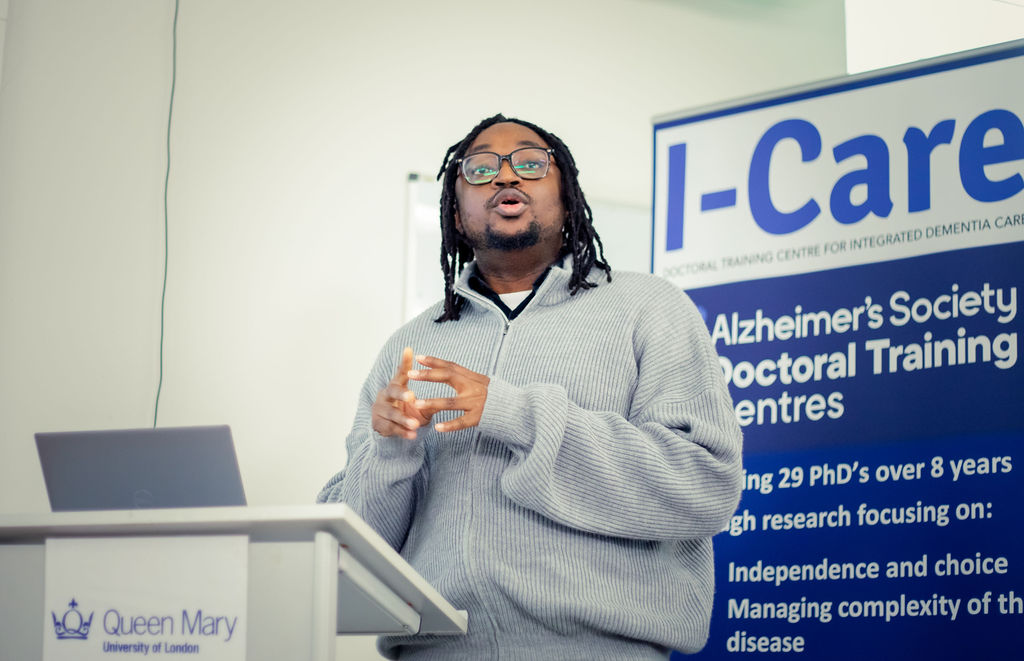
Chidubem is supervised by Professor Laura Ashley, Dr Rachael Kelley and Dr Abigail Woodward at the Centre for Dementia Research at Leeds Beckett University. His project is focusing on:
Supporting people living with both dementia and diabetes to manage their health and receive the right care
Tell us about your research
Many people living with dementia also have diabetes. Managing diabetes can involve checking blood sugar levels, taking medication at the right time, thinking about what you eat and attending regular health checks. These things are important for preventing serious health problems, but dementia can make them much more difficult.
Memory problems might mean that medication is missed or accidentally taken twice. Changes in thinking can make it harder to recognise the warning signs of low blood sugar or follow advice about diet. Family members and friends often step in to help, but they may receive little guidance and health services aren't always designed around the needs of people living with both conditions.
My research aims to understand the challenges that people living with dementia, their family carers and primary care staff face when managing diabetes, and to work with them to develop practical ways of improving care and support.
First, I'll review existing research to understand what we already know and where the gaps are. I then plan to talk with and spend time alongside people living with dementia, their carers and primary care staff to better understand what managing diabetes looks like in everyday life.
Finally, I hope to bring people living with dementia, carers and healthcare professionals together in workshops to develop ideas for better support. These ideas could include a practical tool, a guide or changes to the way care is organised. Importantly, the suggested changes to support will be shaped by the people who could ultimately use it.
Throughout the project, I'll work with advisory groups that include people with lived experience and people from ethnically diverse communities. They will help shape the questions I ask, how I involve people in the research and how I share what we learn.
How will this research impact people living with dementia?
There is currently very little research looking at how people living with both dementia and diabetes can be supported with the day-to-day management of their health. There is even less research involving people from underserved and ethnically diverse communities.
I hope my research will ultimately help people living with dementia manage their diabetes more safely and with greater confidence, while also giving family carers and healthcare professionals the support they need.
In the longer term, I hope the work can contribute to reducing avoidable health emergencies and hospital stays and lead to practical recommendations that could be tested in future research.
Above all, I want to make sure that improvements in care reach the people and communities who need them most.
What inspired you to research dementia?
My connection to this research is personal.
My dad experienced memory problems that were never diagnosed, alongside other long-term health conditions. He lived in one of the poorest areas of one of the poorest countries and died following a sudden cardiac arrest, without access to the care that might have given him a better chance.
I often wonder whether things could have been different for him.
That question is an important part of why I do this work. I want to improve the chances of people living with dementia and other long-term health conditions, particularly for people in communities that are too often left behind.
What excites you most about your PhD journey?
I'm particularly excited about working directly with people living with dementia, their families and healthcare professionals to understand what makes managing diabetes difficult, and then working together to create ideas for better support.
I'm also especially keen to involve people from ethnically diverse communities from the very beginning. These communities can be underrepresented in dementia research, so I want to make sure their experiences and perspectives help shape the project.
How does it feel to be part of the I-CARE Doctoral Training Centre?
Being part of the I-CARE Doctoral Training Centre means a great deal to me.
My PhD exists because of the generosity of Alzheimer's Society supporters, and I feel a real responsibility to make that support count for people affected by dementia.
Being part of a Doctoral Training Centre also means I'm not doing this alone. I'm part of a community of researchers who I can learn from and work alongside, while developing the skills and experience I need to build a long-term career in dementia research.
Research on integrating dementia care
This Centre’s research focuses on ways to provide better care and services for people with dementia, from their diagnosis through to the end of life. Find out more about their cutting-edge research and how they’re working to improve the lives of people affected by dementia.