Dementia Support Line
Can ‘brain hearing’ tests detect dementia before symptoms appear?
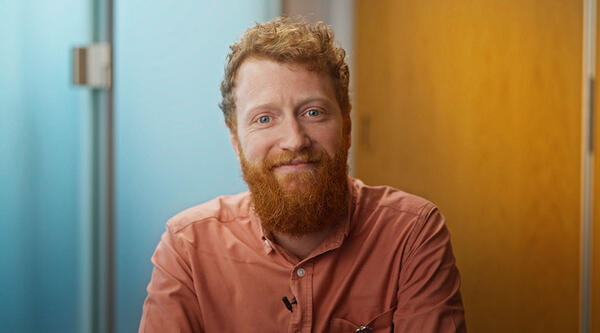
Dr Chris Hardy is exploring whether early hearing changes could act as a quick, low-cost way to support a diagnosis of dementia sooner.
Lead researcher: Dr Chris Hardy
Institution: University College London
Project type: Postdoctoral Fellowship
Themes: Diagnosis
Running time: 2024-2028
Project summary
Research has shown that people who experience hearing loss have a greater risk of going on to develop dementia however we still don’t fully understand why the two are linked. Subtle changes in how the brain processes sound known as “brain hearing” may appear very early in Alzheimer’s disease, before memory problems begin.
Project background
Dr Chris Hardy, the 2nd Alzheimer’s Society Carol Jennings Fellow, is exploring whether these early hearing changes could act as a quick, low-cost way to support a diagnosis of dementia sooner and for people from all backgrounds.
One promising way of identifying dementia early, cheaply, quickly, and easily is by using tests of ‘brain hearing'.
Hearing loss is a major dementia risk factor, we hear with our brains as well as our ears, and brain regions that perform difficult hearing tasks are affected very early in Alzheimer’s disease.
What does this project involve?
Dr Hardy’s project has three main aims:
- To understand how hearing changes reflect changes in the brain. Dr Hardy will study both ear related hearing loss and brain related hearing loss in people living with Alzheimer’s disease and a rarer form of dementia called primary progressive aphasia.
- To develop better tests of brain hearing that work fairly for everyone. These tests will measure how well someone can understand speech in noisy or complex situations and will be designed to suit people from a diverse range of cultural and language backgrounds.
- To investigate whether brain hearing changes might be a sign of dementia before symptoms begin. Dr Hardy will work with people who carry rare inherited genes that cause Alzheimer’s disease to see whether changes in how the brain processes sound can predict when dementia symptoms are likely to appear.
How will this impact people living with dementia?
With the first treatments that can slow Alzheimer’s disease now emerging, early and accurate diagnosis has never been more important.
This research will help identify hearing changes that reflect early change in the brain associated with dementia, create new and fairer tools to diagnose and monitor dementia and hopefully identify early warning signs that show when dementia is likely to begin.
Together, these findings could lead to faster diagnosis, better monitoring and improved access to care for people affected by dementia.
If successful, this project could provide a simple, accessible way for clinicians to detect dementia earlier, improve diagnostic accuracy across diverse communities and better understand how hearing loss contributes to dementia risk.
Want to learn more?
If you're interested in updates on Chris' project, read his latest interview describing the new "brain hearing" test and how it could improve diagnosis across communities.
About the Carol Jennings Fellowship
The Fellowship was created to honour Carol Jennings, whose involvement in Professor Sir John Hardy’s ground-breaking study helped shape the amyloid hypothesis. Carol and her husband Stuart became powerful advocates for dementia research, later named Alzheimer’s Society Vice-Presidents.
To continue her legacy, Alzheimer’s Society and the Jennings family established the Carol Jennings Fellowship. Dr Hardy becomes its second recipient.
Carol’s remarkable contributions guide my work every day, and I am proud to continue her mission to improve lives through innovative dementia research.