Dementia Support Line
No 10 handed letter demanding better for everyone affected by dementia
Our letter demanding better for everyone affected by dementia, signed by almost 60,000 people, has been handed into No 10 Downing Street.
Campaigners, including broadcaster and Jon Snow, who recently revealed his dementia diagnosis, are calling for a bold and ambitious plan for better access to early and accurate diagnosis of the disease as research suggested many are facing months-long waits.
It was revealed in June that the veteran broadcaster had in 2023 been diagnosed with Alzheimer’s disease, which is the most common form of dementia. He is supporting the Alzheimer’s Society’s call for a better plan to tackle the disease.
Actors Sir Jonathan Pryce, Dame Meera Syal, Suranne Jones and Vicky McClure – all Alzheimer’s Society ambassadors – are also signatories to the letter that was handed in to Downing Street on Wednesday.
People are having to waiting too long for a dementia diagnosis
The letter hand-in comes as a survey by the charity of just over 1,000 UK carers of people with dementia saw just under half (45%) tell of waiting more than six months for a dementia diagnosis after first seeking help.
Among the 868 carers supporting someone who had received a formal dementia diagnosis, 46% said the time taken to receive a diagnosis affected their work, just over a third (35%) said it made it harder to plan for the future, and three in 10 felt life was on hold.
We're urging a new nationally recognised standard be put in place to ensure someone with dementia receives an accurate diagnosis within 18 weeks of a GP referral, as well as a care plan and access to treatment where appropriate. Such an ambition has already been met for all other major health conditions.
A bold and ambitious plan for everyone affected by dementia
The letter calls on the Government to 'set an ambitious goal to reduce the number of people that die from dementia; ensure robust plans are in place to deliver disease modifying treatments, as they become available; support the delivery of high-quality dementia training for the social care workforce; and ensure everyone can access an early and accurate diagnosis'.
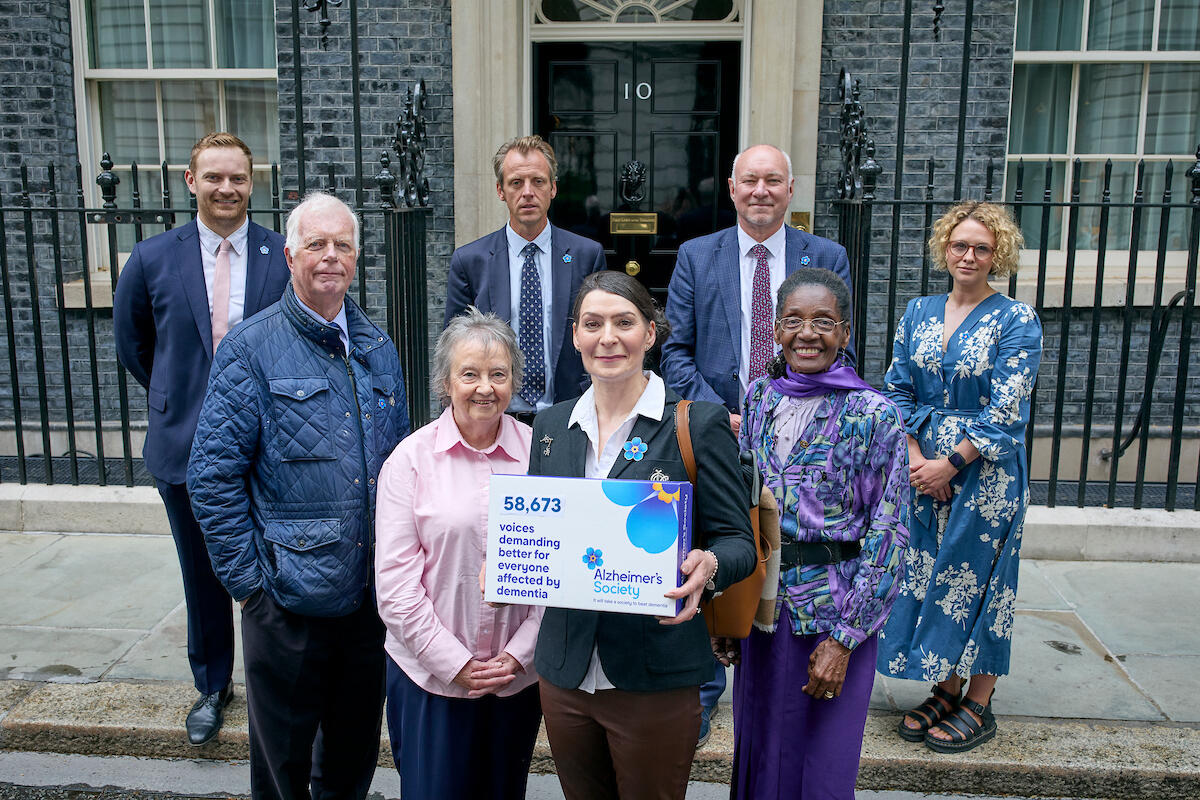
Michelle Dyson chief executive at Alzheimer’s Society, said it would never be accepted for someone to be 'left to work out the next steps on their own' after being diagnosed with a disease such as cancer, but that this is 'the reality for too many people affected by dementia'.
She said: 'A dementia diagnosis can bring answers, understanding and access to the support, treatment and care that can make a real difference to people’s lives. But we know things can be so much better.
'Too many families spend months, and sometimes years, waiting for answers while their dementia progresses. It is like trying to plan a journey without knowing where you are going or when you will arrive.
Behind every delayed diagnosis is a family living with uncertainty and trying to prepare for the future without the support they need.
The Government's response
A Department of Health and Social Care spokesperson said: 'This Government is determined to strengthen the support that is available both to individuals affected by dementia, and the family members who look after them.
'We are bringing forward the timetable for Baroness Casey’s commission on reform of the social care system, and we are appointing a new dementia tsar to help lead our work in that area, as recommended by Baroness Casey.
'We are also implementing a new action plan for unpaid carers to ensure that they receive the support and recognition they deserve for the selfless work they do.'
Demand better for everyone affected by dementia
Demand that after being referred by their GP everyone with dementia receives a diagnosis, a care plan, and, where appropriate, begins treatment - all within 18 weeks.