

 Dementia Support Line
Information
Understanding the unique needs of LGBTQ+ people with dementia
Living with dementia as an LGBTQ+ person can bring particular challenges, both for the person and for those caring for them. At Alzheimer's Society, we're always looking to understand and address these needs.
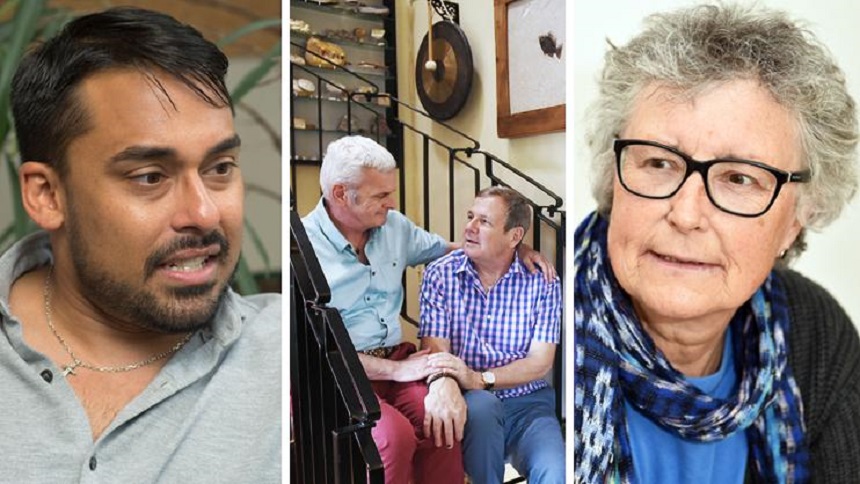
Some people may ask why we need a to explore the needs of people affected by dementia who are lesbian, gay, bisexual or trans. And whilst it's true that many of the challenges dementia presents to LGBTQ+ people are the same as those faced by everyone else, some are unique.
Research suggests that there is a higher rate of subjective cognitive decline in this community, compared to cisgender heterosexual people.
Fiona Carragher, Chief Policy and Research Officer at Alzheimer’s Society acknowledges that, "The jury is still out on why this could be the case, but there is a chance it could be related to higher rates of depression, and lack of regular access to healthcare due to discrimination."
Many LGBTQ+ people will have experienced negative attitudes in their lives, and some will have experienced hostility, rejection or abuse. Some may have encountered prejudice or discrimination from services such as the police or health and social care services. They may, therefore, not want to access or contact sources of support, or they may feel uncomfortable being open about their sexual orientation or gender identity around professionals.
Working to support the individual
It’s important that we acknowledge these fears, and be sensitive to these needs, in order to support everyone to live well with dementia.
Alzheimer's Society's Natasha Howard, who manages innovative solutions to challenges people affected by dementia face, notes,
"Supporting anyone with dementia should involve understanding them as an individual - their life story and preferences, as well as recognising the people who are most important to them.
We want to find solutions that make a real difference for LGBTQ+ people, and which could be put into practice more widely.
Some LGBTQ+ people do not see their ‘family of origin’ (the people they grew up with, often a biological or adoptive family) regularly or at all. We know that sometimes this is a result of hostility or lack of understanding from the person’s immediate family.
Older in this community are more likely to be single and live alone. This can affect the support that they need and also their access to it. This can lead to the person becoming isolated and not being properly supported.
People with dementia may also find it harder to stay in touch with people, so they may need a bit more assistance in continuing their social relationships.
Older LGBTQ+ people often experience stigma, having lived through times when they were treated as criminal or unwell. They may feel forced back into the closet, or their dementia could mean they believe they're still living in those times. Even now, some people face prejudice and a lack of understanding from the systems and people providing health and social care.
We want to find solutions that make a real difference for LGBTQ+ people, and which could be put into practice more widely.
Alzheimer's Society are continually learning about how best to meet the needs of LGBT people affected by dementia. The perspectives of people with first-hand experience are vital, so please get in touch if you'd like to share your story with us.