

 Dementia Support Line
Helping more people live well in the community, Essex
Read about a project in Essex that gave personalised care to local people affected by dementia.
The purpose:
To help more people live well with dementia in Essex by enabling them to continue with day-to-day and family life without discrimination or unfair cost. This includes being accepted and included within their communities, and not living in isolation or loneliness.
Note, this aligns with our guiding Dementia Statements.
Preparing for the community project
We first wanted to understand what matters most to people living with dementia in Essex and to respond to these needs.
The team began testing new approaches and making improvements to existing services, such as dementia cafés. They also started developing local Dementia Action Alliances to ensure that people affected by dementia are included in decision-making processes and that local services become more dementia-aware.
What happened
Dementia cafés became information sharing hubs, where people were encouraged to plan and engage in activities together. They started to meet in a wider range of community venues, often alongside mainstream services.
When an activity ended, people were provided with a range of new options so that they could continue to live well with dementia.
The results
The team enabled more people to continue to be active in their local communities, choosing to do the things that matter to them.
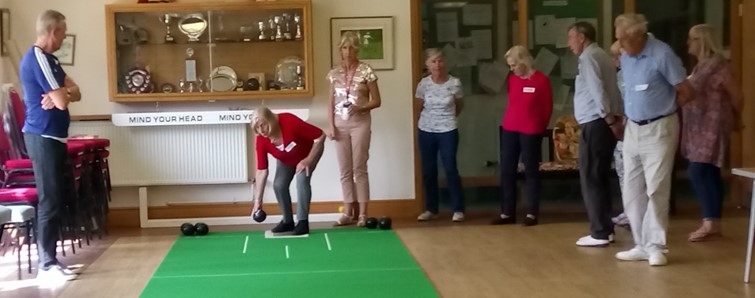
- Some dementia-specific groups have gone on to use community-based activity rather than dementia-specific services. For example, members of a dementia café said they would like to do short-mat bowling. So the team set up a time-limited group to do this with them.
Most members wanted to continue to meet at the bowling club. The team found the bowling club was supportive of this idea and helped with an application for funding to enable people with dementia, and carers, to continue to meet at the bowling club. - New groups have emerged, saving activities which were at risk of closing. For example, a snooker group for people living with dementia did not have enough members to remain sustainable. After talking to members about their experiences and preferences, the found it would work well to merge the snooker group with a peer support group for people with dementia.
This new ‘motivational’ group started playing snooker at a local leisure centre. This has worked well, and the partners of people with dementia have also chosen to meet together for peer support. - Given the positive feedback and outcomes for people with dementia and dementia carers, the team have continued to consult with all our time-limited groups on community options, including walking groups and table tennis sessions. In the next part of the year the team are planning yoga and relaxation sessions, an art group and cooking.
What changed for people with dementia
I have learnt a new skills, which shows that people with dementia can learn new things
– Bowling club member with dementia
My husband used to attend another bowls group. He has played for years. As his dementia progressed, he was asked not to go back to his old club. We were both so upset because we thought these people were our friends.
Since he came along here, he has not stopped smiling. He was so glad to be doing something active again and feeling part of a group
– Partner of bowling club member with dementia
Key learnings from the project
Working in an integrated way under the Essex Dementia Strategy has encouraged sharing. For example, the creation of the bowling club has been shared by the commissioner with other services and teams across Essex to encourage them to learn from the approaches taken, and to consider whether they might be able to do something similar where they are.
Key contact to find out more:
Alzheimer's Society's team in Essex. Email: [email protected]