

 Dementia Support Line
Research
Lighting up the way to faster, cheaper diagnosis of Alzheimer's disease
An innovative sensor that measures changes in the properties of light – and which is the size of a postage stamp – could help improve how Alzheimer’s disease is detected in the future.
Getting a diagnosis for dementia, including Alzheimer’s disease, is critical for many reasons. Early and accurate diagnosis is vital to ensure people can access the physical and emotional care and support they need, including potential new treatments.
Diagnosis can be a lengthy, stressful experience. Most often, it starts at the GP surgery with a referral for memory tests. But it can also involve brain scans and spinal taps, which can be costly and are not always widely available.
While we know that diagnosis is the most effective way to improve the lives of people living with dementia, too many people are living without one.
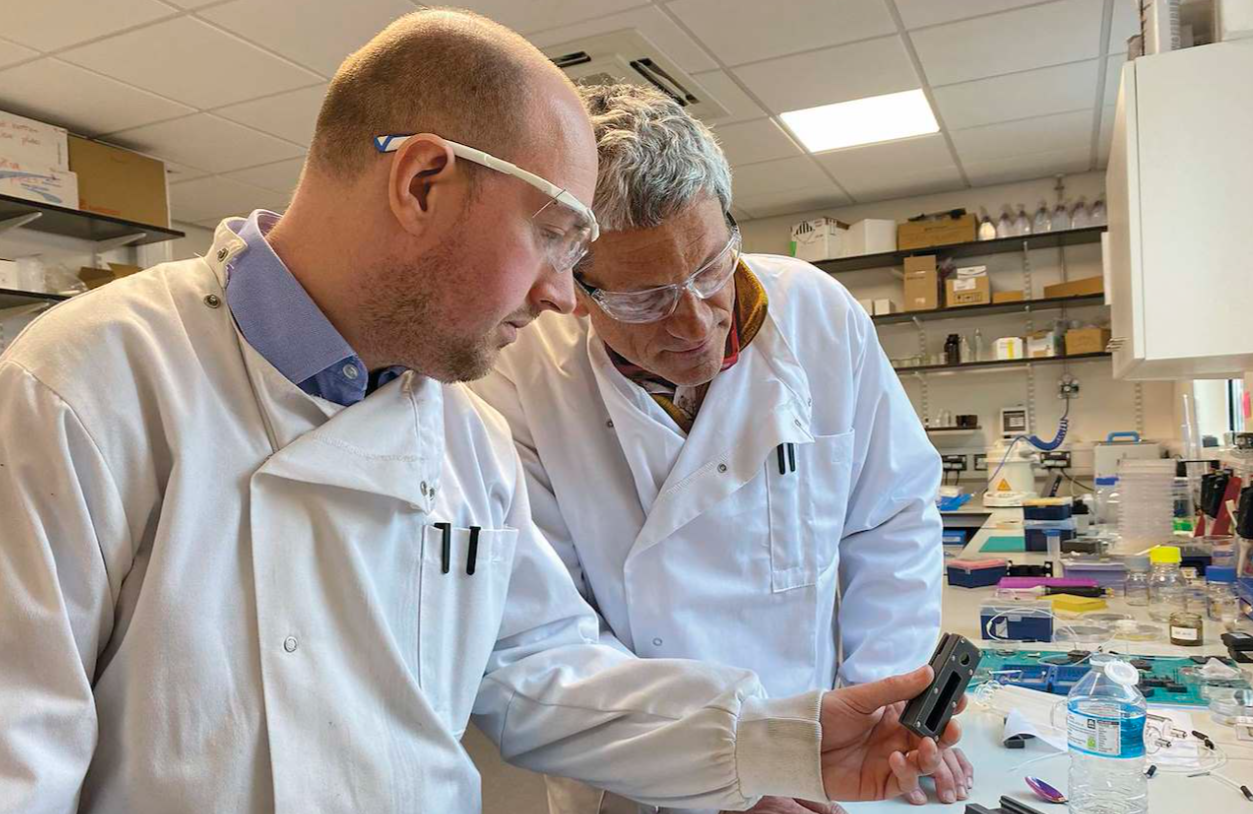
Dr Steven Quinn and Professor Thomas Krauss with the prototype of their blood test
Making diagnosis faster, simpler and cheaper
Dr Steven Quinn is leading a team, funded and supported by Alzheimer’s Society, that is working to change this by making diagnosis faster and more accessible. He’s optimistic that this could happen in the future.
His research is focused on the development of a new light-based technology, which could provide a simple and cost-effective blood test to detect the signs of Alzheimer’s disease. At this stage, the team is developing and testing the technology in the lab, to understand whether it could one day offer a cheaper and more accessible way to support diagnosis.
'What we know is that the amount of specific proteins called amyloid and tau in our blood – and importantly, the ratio between these proteins – seem to change in someone with Alzheimer’s disease,' he explains. 'So we’ve developed a biosensor that’s capable of detecting those proteins.'
Dr Quinn’s light biosensor could help identify changes in Alzheimer’s disease-related proteins in the blood. The light sensor is a tiny device – about the size of a postage stamp. It uses just a single droplet of blood to spot proteins linked to Alzheimer’s disease.
When these proteins stick to specially designed molecules on the sensor’s surface, the colour of light moving through the biosensor changes, allowing researchers to detect them. The changes in protein levels can be measured based on these changes in light colour. In the future, this process could take no more than a few minutes, identifying people who may need further tests before undergoing hospital visits or further procedures.
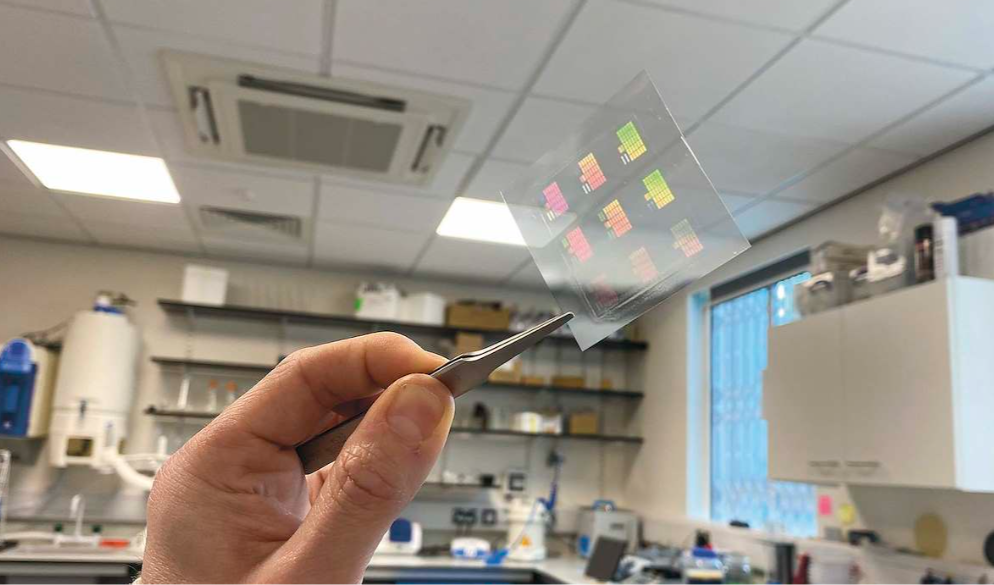
Light sensitive technology in the laboratory.
Results possible with just one drop of blood
Tell-tale signs of diseases in the blood are known as biomarkers, and they’re set to lead the way to a new, revolutionary era of diagnosis. These biomarkers could help doctors identify people who may be showing early biological signs linked to Alzheimer’s disease, before symptoms become more severe. Dr Quinn shares,
We think that the protein levels change in the brain around five to ten years before the first clinical symptoms emerge. Because the light biosensor is sensitive enough to pick up these early-stage biological changes, people could be identified for further tests long before memory loss becomes apparent.
The team’s research aims to demonstrate that this new light technology can be as accurate as current methods for diagnosing Alzheimer’s disease. The hope is that, one day, this could lead to a simple handheld blood test that helps doctors identify who may benefit from further investigations.
It could mean that, in the not too distant future, a dementia diagnosis starts with a blood test at your GP surgery. In practice, this kind of test would not replace brain scans or other clinical assessments needed to confirm a diagnosis. Instead, it could help identify people who should be referred for further investigations much earlier in the diagnostic pathway.
Supporting wider health investigations
Dr Quinn’s light biosensor has the potential to be a new tool for a cheaper and more easily accessible dementia diagnosis. But its potential uses could extend beyond helping doctors identify the signs of Alzheimer’s disease.
'In principle, our biosensor can be used to support an Alzheimer’s diagnosis, but also for the exclusion of Alzheimer’s disease, which might be quite a significant benefit for clinicians,' Dr Quinn explains. 'It could help indicate when Alzheimer’s disease is less likely, allowing doctors to investigate other causes for a person’s symptoms.'
Unlocking the future treatments
To ensure this new technology is accurate for everyone, Dr Quinn knows that the trials need to include a variety of people. 'You really want to ensure that your clinical trial cohort is as representative of the wider community as possible,' he stresses. 'Because researchers do not yet fully understand how biomarker levels vary between different ethnic groups, demographics and sexes, testing across a highly diverse group is essential. This guarantees that as these life-changing tools are rolled out, nobody is left behind.'
A breakthrough in early diagnosis could also unlock the future potential of new treatments. As more disease-slowing drugs like lecanemab and donanemab emerge, the earliest possible detection of amyloid protein build-up is essential for people to benefit.
Dr Quinn’s research could help improve how we detect and understand Alzheimer’s disease in the future – innovation made possible thanks to supporters like you. He says,
To put it into some kind of perspective, this research would not be possible without the support of Alzheimer's Society donors, fundraisers and volunteers. It has genuinely enabled us to push what's possible, and I am so grateful.
Research will beat dementia
Our research aims to understand the underlying causes of dementia, advance diagnosis, improve care and search for a cure. Find out more about some the many research projects that we are funding.