

 Dementia Support Line
Information
Alzheimer's and dementia care in Japan
Japan's pioneering care for dementia and Alzheimer's disease has respect at its heart. Not only that, but the country also pays for it in an equitable way.
Dementia in Japan
I saw some truly unforgettable sights in my recent trip to Japan; the sun setting at the Kiyomizu-dera temple, masses of people crossing the world's busiest crossing at Tokyo (a la Lost in Translation), a traditional kabuki performance.
However amazing, the one thing stands out above the rest was viewing a group of people living with dementia giving it their all in a group karaoke session. Even if pitch and tone may not have been perfect, it was the joy and togetherness in the room that struck me as remarkable.
Karaoke was just one of the pursuits on offer at Yumeno Mizuumi Muna, one of the care settings I visited on the outskirts of Tokyo. My trip was part of an information-swapping visit to Japan, our partners in a global approach to tackling dementia through our respective governments.
Respect for individuality and freedom
Around 80 people attend the day sessions at the centre. Independence and choice are absolutely key here. There is no 'one size fits all' approach to activities.
People, most living with dementia, and some with other disabilities, put their own agenda together for the day. They select activities upon arrival, which have a bar code attached so everyone knows who is doing what at any given point.
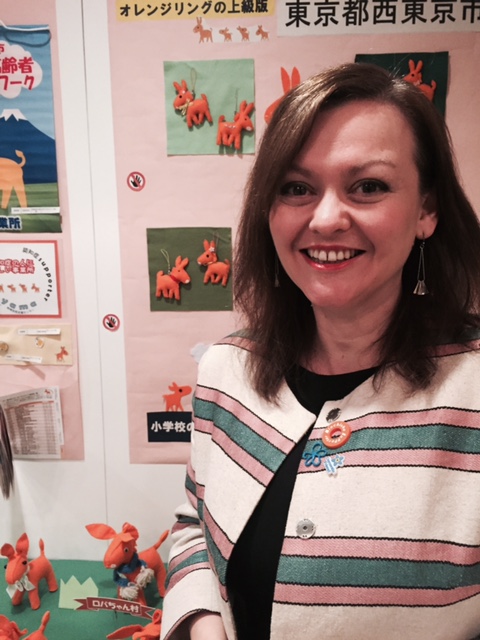
From woodwork to baking to watching samurai movies, everyone does their own thing. Staff are present, but not obtrusive.
This is very much about a fiercely guarded respect for individuality and freedom, regardless of a person's dementia.
Also subtle are the ways in which staff keep a track on people's cognitive capacity, and any progression in a person's dementia. People help with tasks such as matching chopsticks ready for the next day, and any difficulty is subtly noted.
Residential dementia care in Japan
As well as day care services, the centre also offers some short and longer term residential care. Each room is, again, individual and made to feel like home.
This care - which I am told is pioneering and seen as the way forward in Japan - is paid for through long term care insurance. The system is part funded by by compulsory premiums for all those over the age of 40, and part-funded by national and local taxation.
'Co-payments' of around 10 per cent, are paid by everyone receiving care. This is a stark difference to the ticking time bomb that is the cost of social care in the UK, and the drain on family resources that can kick in at the same time as diagnosis.
It seems Japan has found a way to not only deliver care that has respect at its heart, but to pay for it too in an equitable way.
The poorest people receive the care they need, and those with greater funds pay higher co-payments.
'Creating happiness' for people with dementia
The happiness at the centre was palpable, and that wasn't a one off. With my host, Hiroko Sugawara, of the National Caravan-Mate Coordinating Committee, Japan's version of Dementia Friends, and interpreter Midori, we then headed off to the Noto Community Care Centre, whose approach is to 'create happiness' and enable people to live well.
Here there is also a mix of day and residential care. Residents live in groups of nine. One woman took me to see her room, proudly pointing out the elements that showed her individuality.
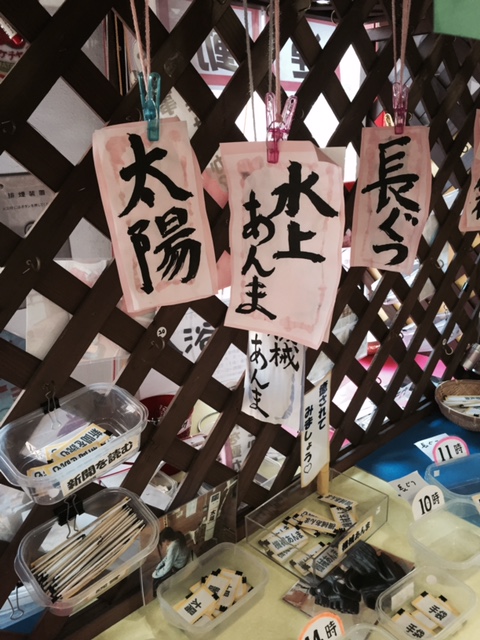
As I watched people chatting or embroidering together, there was a real sense of contentment. This, I was advised, is how the success of the care provided is assessed.
Dementia Friends in Japan
The next day, the learning continued, as we shared information on Dementia Friends, as well as the Caravan Mates movement it was inspired by. I presented a Dementia Friends session to 500 people at a conference and awards ceremony, which, was well received. We then had a great question and answer session on approaches, and the cultural differences which underpin these.
There is much less interactivity in the Japanese model, and more of an emphasis on learning about dementia.
Whatever the differences, we agreed that any movement that has inspired millions of people here and in Japan to learn more about dementia, and to act, is remarkable to see, and that there is a lot we can learn from each other.
Greater understanding is one thing, action is quite another. I was privileged to watch the awards ceremony, which rewarded dedication to building dementia friendly communities.
People had travelled from across Japan to share their innovations. These ranged from engaging university students in finding people with dementia who had become lost, to dementia cafes and a fire station working hand in hand with the police in a groundbreaking partnership.
They were people of all ages and backgrounds; people with a shared purpose to create communities in which people affected by dementia could fully participate, built upon a principle of respect for everyone. That is an inspiring sight.
Find out more
- Find out more about how Dementia Friends operates internationally
- Read our blog post on Dementia Friends Nigeria - tackling a global health epidemic