

 Dementia Support Line
Real stories
Open conversations about dementia can help break down the stigma
Ellen Turner in Somerset, 68, says more openness and honesty about dementia can help pave the way for better support.
I noticed that I was forgetting things – what I’d gone upstairs for, leaving the gas hob on, plugging in an iron and walking off.
My mum had dementia and, to be honest, I felt I was walking the same steps that she had. But my GP said I was far too young for dementia and, after testing my blood, she put me on supplements for low folic acid.
I went back when there was no change. Finally, I had a scan and tests, but I had to wait another year before I got my diagnosis.
When I was told it was vascular dementia, it was a shock but, deep down, I also expected it.
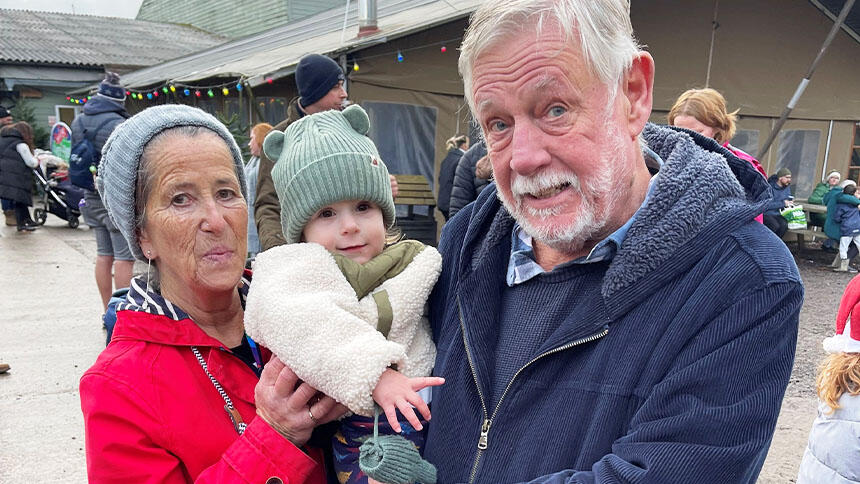
Ellen, her husband Malcolm and her grandchild.
Where I found dementia support
What I didn’t expect was that things hadn’t moved on since Mum’s diagnosis. My GP didn’t signpost me anywhere. There was no ‘OK, this is what you’ve got and this is the help you can get’ type of advice.
I felt totally abandoned, unsure what to do next. I was winging it. That was until I found support, including my dementia adviser Jo Robinson.
She came out to our house and sat with Malcolm, my husband, and me and went through anything, A–Z. She was brilliant and still is, always going above and beyond.
I started going to a support group every week. There are about 50 to 60 people there and I can’t imagine life without them.
Speaking out about better dementia care
Although I’d been involved with fundraising and written letters about dementia to magazines and papers, I hadn’t done any campaign work.
But when I got a call from Alzheimer’s Society to attend an event with the Department of Health and Social Care, I jumped at the chance. It would be an opportunity to give my point of view as the government develops a new framework for dementia care.
As well as having dementia and experiencing it in my family, I used to be a nurse, so I have lots of perspectives. There were about 30 people with lived experience of dementia at the event.
We talked about lots of different topics, starting with diagnosis.
I voiced all the things that are important to me.
I spoke about how I believe GPs need to take a greater role in diagnosis and signposting people to help.
I talked about how society needs to be better educated on dementia, starting from school. About the massive loss of independence after diagnosis and about how many of us with dementia have other health issues going on – there’s a bigger picture. I also spoke about the need to care better for our carers.
I can’t tell you how I felt at the end of the day. It meant so much to express myself and be listened to. Everyone was supportive and I wasn’t afraid to say anything.
I felt like I was speaking on behalf of Mum, for everyone in my support group and anyone without a voice.
Improving dementia diagnosis
When you compare the experience of getting a dementia diagnosis to a cancer diagnosis, it’s poles apart.
Quite simply there’s not enough being done to support people with dementia.
Things have to improve.
Key to this is tackling the stigma around dementia and breaking down myths.
At the moment, people are frightened to get a diagnosis. There’s also lots of discrimination towards people living with dementia. When I was first diagnosed, I kept it quiet and was careful with who I eventually told.
People with dementia should be treated with respect like anyone else. I feel motivated to keep speaking out.
Find support near you
From activities and social groups to dementia-friendly transport, our dementia directory can help you find support services local to you.