

 Dementia Support Line
Information
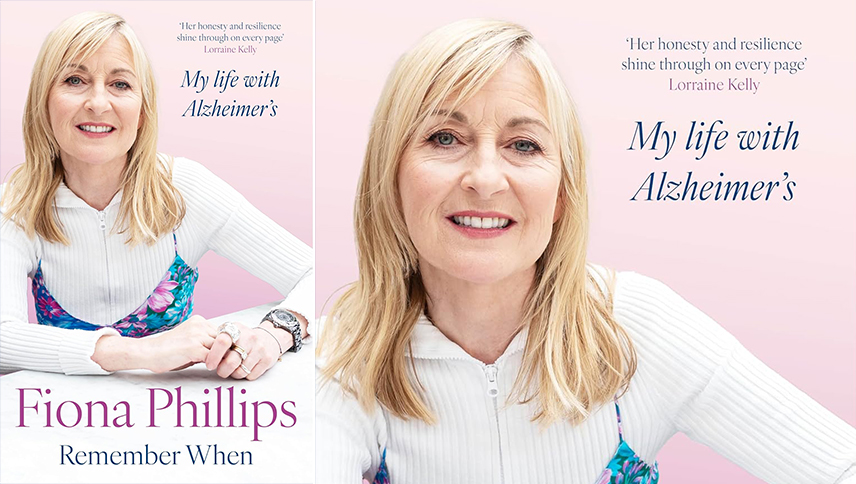
Book group: Remember When by Fiona Phillips
We read a compelling memoir from a well-known TV presenter who was diagnosed with young-onset Alzheimer’s at age 61.
Fiona Phillips, a longtime supporter of Alzheimer’s Society, became one of our ambassadors in 2007. Having experienced dementia with both her parents, she was diagnosed with young-onset Alzheimer’s herself in 2022.
It’s no surprise her memoir Remember When is a bestseller, but our reviewers clearly thought this is well deserved.
‘I haven’t stopped thinking about this book since I put it down,’ says Donna Stephens in Hampshire.
‘How Fiona was so brave to face her own one-way journey after supporting both parents on the same doomed path.
It reminded me many times of the lives of people who share their stories on the Society’s Dementia Support Forum – the pain, the bewilderment, the anger... so many emotions.
Toto2 in East Sussex says, ‘I have never read a book that made me cry so much.
‘The brutal honesty of how things started with Fiona’s mum reminded me of my mum. It was so similar, and all the signs were there, but you never realised.’
Sally Newell says, ‘It was heart wrenching that she had to go through Alzheimer’s with both of her parents before also getting the disease.
‘However, being able to describe three different presentations gave me a real insight into how the disease affects people differently.’
Mary adds, ‘This book held me captivated while Fiona took me on a rollercoaster journey through her life.
No ghostwriter used but written by her with total honesty about the help from her brother and a friend with memories of childhood and career.
Fiona’s family history of dementia
Ann Molyneux in Peterborough says, ‘Fiona writes about her first experience with Alzheimer’s at 19, when her beloved grandmother succumbed to the disease at 60.
‘Then she watches the same thing happen to her mum and dad.’
‘I enjoyed reading about Fiona’s early life,’ says SeaSwallow, ‘how her career developed and her family life, but it was so sad to read about the difficulties that she had caring for her parents only to be diagnosed herself.’
‘She tries her best to look after her parents, who live a long way from her,’ says Donna, ‘simultaneously holding down a very demanding job and caring for her own family.’
Toto2 says, ‘The way Fiona described when her mum passed was raw but relatable, as this happened with my mum. She waited until we all left before she passed too.
The most upsetting part for me was Fiona’s dad when he was admitted to a unit, and the way Fiona described how her bright and clever dad turned into a 'zombie' due to the medication they kept 'pumping' into him.
The book provides two perspectives
Donna says, ‘The book is written from both Fiona’s and her husband Martin’s perspectives, which adds great depth and dimension.’
‘It shows how someone with dementia recalls an occasion and the way someone caring sees things,’ says Toto2.
‘This is what would make this book a must-read for anyone starting this journey, as it gives the reader both sides.’
‘Her husband’s perspective gave depth to the book,’ says Sally, ‘but also was the greatest source of sadness because, although he says it’s not about him, he is having to live every day and describes the heartache and daily challenges.’
SeaSwallow says, ‘This way of writing really highlighted though the way that Fiona’s ability to express herself had diminished as the book progressed, one of the very sad things that was highlighted in the book.’
Fiona and her book are relatable and real
Toto2 says, ‘I remember Fiona from her TV days and have always loved her bubbly professional way of dealing with people. To see how angry she got with her parents’ conditions made her more relatable and not just someone from TV.’
‘Fiona’s own diagnosis comes after much searching for reasons why she was getting such “brain fog” and, like her mother, the menopause is blamed at first,’ says Donna.
It seems incredible that links weren’t made, but denial is a kind of self-protection.
SeaSwallow notes, ‘Martin states that he understood that, because they were relatively well off, they were able to afford carers, which many people could not do so.
‘But he also stressed just how difficult it is caring for someone and also navigating the care and health systems, and you could really feel his frustration at times.’
The final parts of the memoir
Ann says, ‘Fiona knows there are memories attached to her family home in south London, where her children grew up, but finds they are out of reach.
‘She must rely on newspaper and magazine cuttings and YouTube clips to recall her broadcasting career. She remembers how carefree she was in her 20s and how different things are now, how overwhelming. She’s glad she never knew how things would turn out.’
Donna says, ‘I could feel Fiona slipping away towards the final parts of her memoir, with Martin taking up the reins.
He writes a very frank account of how he now cares for his wife but is so touchingly mindful of protecting her dignity.

Ann says, ‘In a heartbreaking confession Martin admits he misses his wife and notes that, by the end of the book, Fiona has forgotten that she is writing it.’
Toto2 says, ‘This book taught me things I thought I knew having been on this journey with my mum.
‘It makes me feel all the more proud of the way she fought with this disease until she could not fight anymore.’
‘I would recommend the book,’ adds Sally, ‘but it’s not an easy read. It’s a true reflection on how Alzheimer’s has affected three people in one family and the impact it has on everyone.
‘It does not have a positive, uplifting ending because that is not the trajectory of the disease – it is honest as Fiona has always wanted to be.’
SeaSwallow says, ‘This is a book that was well worth reading and hopefully, because of who they are, it will highlight just how awful this disease truly is.’
Remember When: My life with Alzheimer’s by Fiona Phillips (Macmillan, 2025), 336 pages, £22.00, ISBN: 9781035074877. Also available as an ebook and audiobook, paperback due out in 2026.