

 Dementia Support Line
Real stories
Working with the NHS to support dementia innovation
How our new collaboration with the NHS is helping dementia professionals to turn their ideas into real-world innovations.
The idea that high-tech progress can help people affected by dementia isn’t a futuristic concept – it’s already happening.
As part of our quest to boost innovation, we launched a programme last year to draw on the cutting-edge ideas of NHS staff, care professionals and entrepreneurs working in health and care.
The Dementia Innovators Programme is a collaboration between the Society and the pioneering NHS Clinical Entrepreneur Programme.
Fiona Carragher, our Chief Policy and Research Officer, says: ‘It’s all about harnessing the clinical experiences and innovative solutions of healthcare professionals to bring about change for the UK’s biggest killer.’
How the Dementia Innovators Programme works
This is the first time there’s been a collaboration between the NHS Clinical Entrepreneur Programme and a health charity, reflecting a
recognition of the expected impact of innovations in dementia.
Participants get full access to the NHS programme, which has helped create over 500 start-ups since its launch in 2016. These include expert mentoring, networking and training opportunities.
People taking part through the new dementia programme also get a unique package of additional support from Alzheimer’s Society.
Steven McFadyen, our Acting Innovation Programme Manager, says: ‘We offer support in designing new products and solutions for dementia and provide access to dementia experts and people with lived experience.’
The Dementia Innovators Programme has a fresh approach, adds Fiona.
It’s one that fits with our ambition to get a product or solution to every person affected by dementia and the systems that support them.

Our dementia entrepreneurs
The first cohort of 10 entrepreneurs is being supported by the Society until spring 2026.
They have innovative ideas that span dementia prevention, detection and diagnosis as well as daily living and care.
‘The breadth of ideas is really exciting,’ says Steven. ‘They range from innovations that personalise treatment of urinary tract infections or help families to share playlists, to training for medical staff to provide culturally sensitive dementia support.’
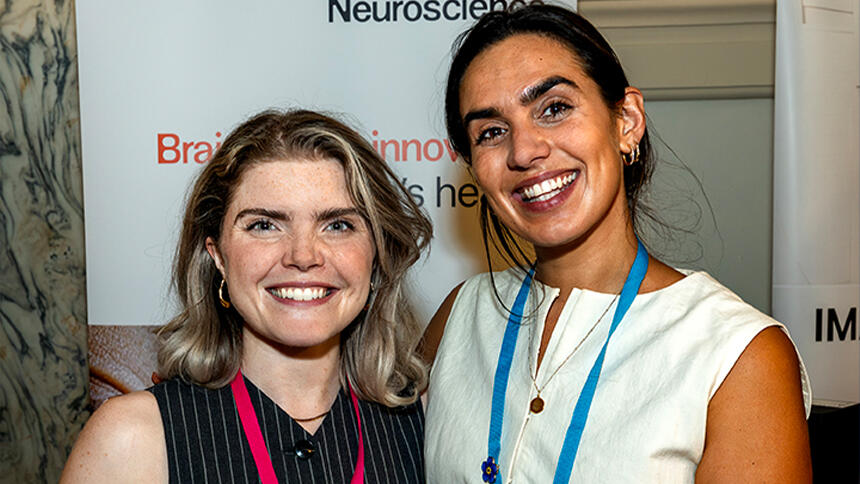
Devika Wood, CEO of Brain+, is one of the first cohort with an online platform called Ayla. This is designed to help more professionals offer effective cognitive stimulation therapy (CST) to people with dementia.
She is enthused by the experience of being involved in the programme: ‘With access to the Society’s expertise and to people affected by dementia, we have gathered so much knowledge. It’s been enlightening and the support we’ve had is second to none.’

Making CST more accessible
CST is usually most suitable for people in the early to middle stages of dementia. It involves structured group sessions with activities that stimulate concentration, communication and memory skills.
But many people are never offered CST. Ayla aims to enable more services and providers to deliver it simply and safely.
‘Our big dream is that everyone diagnosed with dementia is offered CST, so they have the chance to delay cognitive decline,’ explains Devika.
She is motivated by personal experience.
‘My granny was like a mum to me. When she developed dementia, I became a young carer for 12 years.
There’s nothing worse than witnessing somebody who is a huge role model just disappear before your eyes.
‘It left a profound impact on me. I am driven to change the way that people live with dementia, especially our approach and attitude to accessing services.’
Protecting your legal decisions
Oliver Asha is another participant driven by personal experience and a passion to help others.
As a solicitor with a specialism in wills, he was used to advising clients to get capacity assessments.
But when his grandad was diagnosed with vascular dementia, he saw that the process was more difficult than he had assumed.
‘I realised that there are serious barriers to people being able to protect their decisions.’
And these barriers might dissuade them from trying to make an important decision around their will or power of attorney.
One thing that particularly struck Oliver were the challenges for people with dementia who live alone.
This led Oliver to create a digital tool called Capacity Vault, which creates verified evidence of people’s decisions and stores them securely.
‘Our system understands the decision someone is making and applies the correct legal test to show their capacity to make it, conveniently and at a fraction of the cost.’
He says the energy and the knowledge he’s gained so far during the programme have been immense, including the Society’s support in making Capacity Vault more accessible.
‘I am hoping we can go on and use our technology to help in other areas, such as supporting research and the process for signing up for clinical trials.’
Accelerating dementia innovation
Fiona believes the positivity and energy created by the Dementia Innovators Programme will ripple out to create even wider change.
‘Innovations will emerge from this programme which can not only reduce the impact of dementia on our healthcare system, but will inspire more entrepreneurs to design products and services that will make a real difference to people’s lives.’
Our dementia innovation work
Discover how Alzheimer's Society supports and invests in innovative solutions.