

 Dementia Support Line
Real stories
People affected by dementia try out products designed to help sleeping and waking
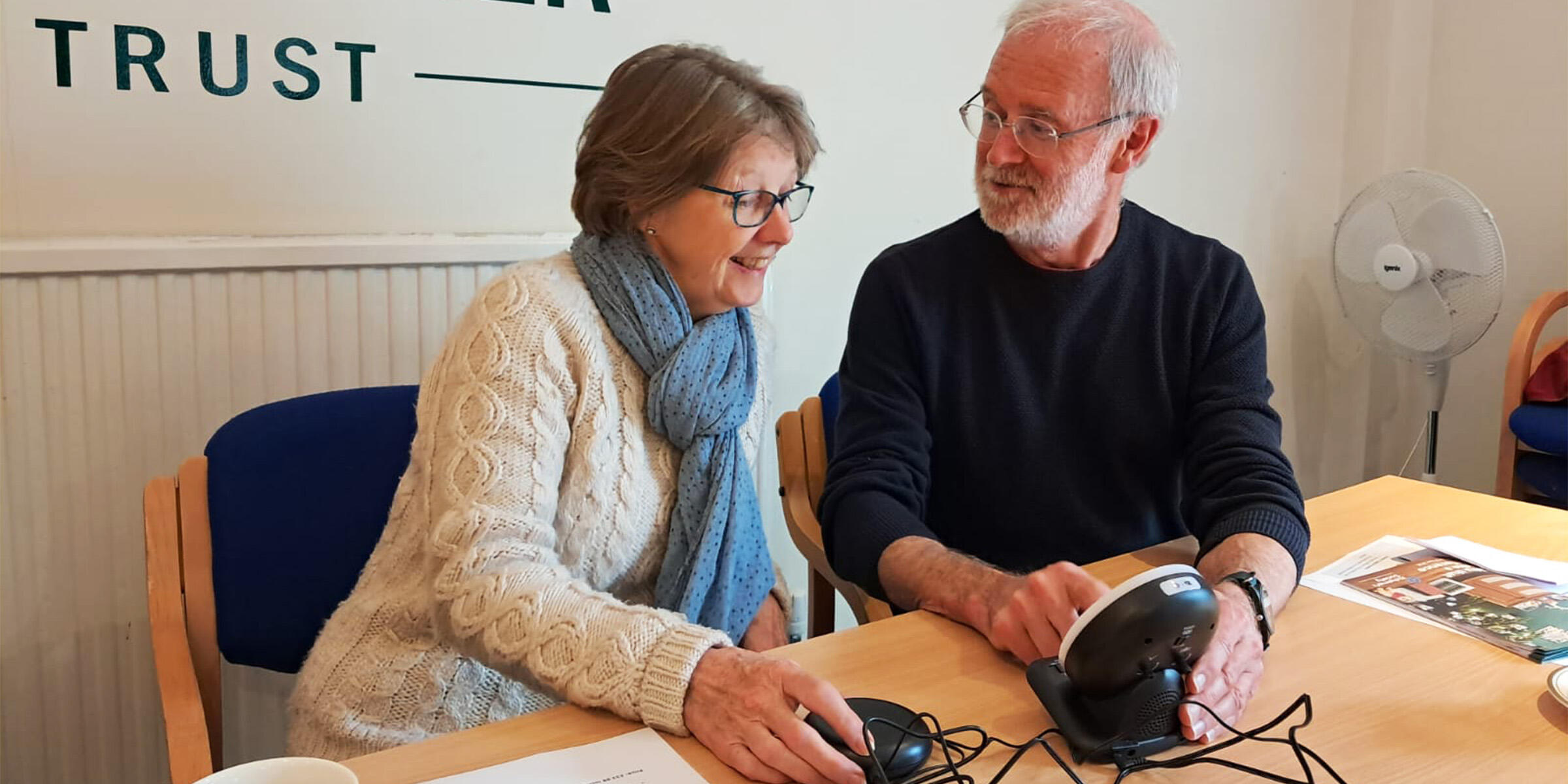
A group of people with dementia and carers in Hereford look at gadgets for better nighttimes and mornings.
When you’re living with dementia, you may find that your sleep is affected. This can leave you – and people you live with – feeling less awake during the day.
Finding ways to wind down before bed, stay safe during the night and feel refreshed in the morning are important.
Some devices are designed to help with these times. We took a selection to a group of people affected by dementia in Hereford to get their opinions.
Sensor lights for nighttime safety
Motion sensor lights turn on automatically when they detect movement in the dark. Group members agreed these are important in helping to prevent trips and falls.
‘I always take our rechargeable motion sensor lights away with us because they’re good for unfamiliar spaces,’ said Brenda.
Sue added, ‘We even have a motion sensor light that attaches to our toilet bowl.’
The group looked at the Plug-in sensor light. As well as coming on when it detects motion, this light can also be removed and used as a torch.
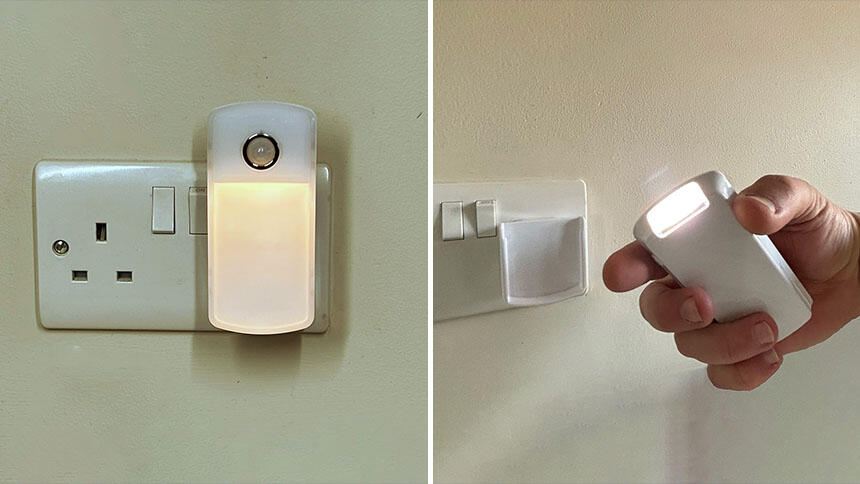
Plug-in sensor light
Everyone agreed that it’s well made, easy to set up and good value.
‘The torch is also really easy to get out,’ said Sue.
‘The only improvement I could see is maybe the button to turn the torch could be another colour and bigger, so it’s more obvious,’ added Mike.
The ‘Get up in the night’ sensor light is about 25 cm (10 inches) long and designed for places such as stairs and skirting boards.
‘And maybe for cupboards too,’ said Brenda. ‘You could even use them in an aesthetic way to light up features in your house.’
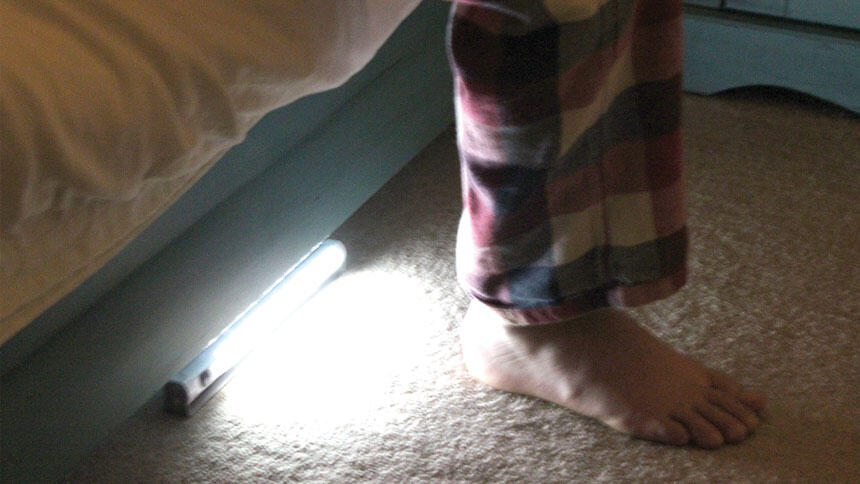
‘Get up in the night’ sensor light
This light was very popular with the group because of its shape and versatility. The current model uses batteries, but the group looked at a new rechargeable model, which will be available in 2026.
Mike said, ‘I like them a lot and could see us buying lots of these.’
Sounds to help you get to sleep
The Soothing sounds night light is meant to sit by your bed. It has 20 sounds designed to help you drift off to sleep, including nature sounds, classical music and white noise.
Group members liked some of these, like the restful rainforest sounds.
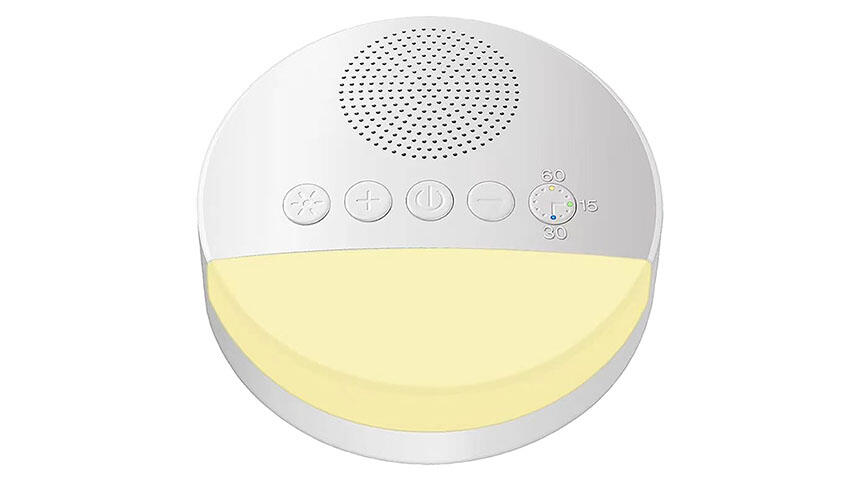
Soothing sounds night light
However, they thought sounds of running water and a crackling fire might trigger panic in some people. The white noises didn’t go down well either.
‘We’re not babies,’ said Brenda.
The group liked that the light is portable and easy to use – especially important when you’re sleepy. They wondered if it could be a little bigger though.
‘It could get lost easily and kicked under a bed,’ said Sarah, a dementia adviser.
Chris commented, ‘I wouldn’t be able to hear it without my hearing aids – but there again, I tend to go straight to sleep anyway.’
Waking up when you need to
Group members chatted about what they currently use to wake up in the mornings. Brenda and Chris have specially designed clocks, while others use their phones.
Despite already having ways that work for them, they were all positive about the Wake & shake alarm clock.
You can personalise the light and volume of this clock easily, but it also has a vibrating sensor to place under your pillow. This is useful if you are deaf or have hearing loss, or simply need something extra to wake you.
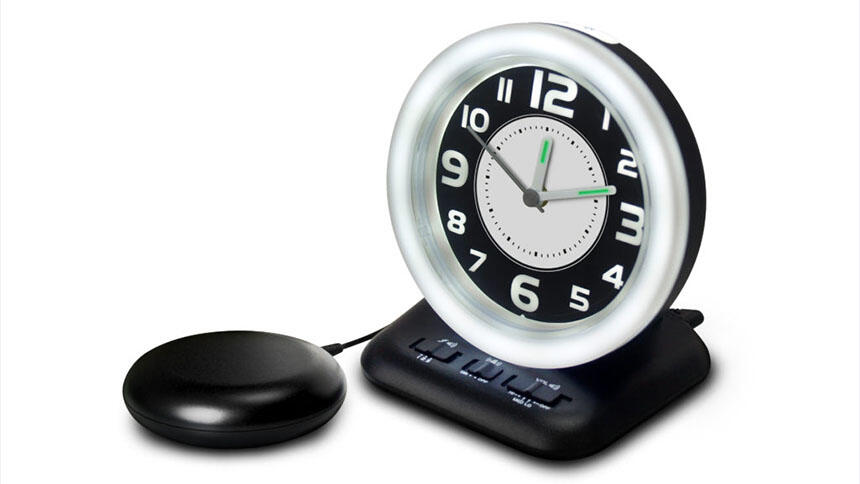
Wake & shake alarm clock
‘It might be a good idea to place the sensor under your sheet, rather than your pillow,’ said Brenda.
‘We have a sensor pad for our fire alarm and this is what our local fire service recommended we do. That’s because a sheet is fitted and less likely to move.’
Taking care when you’re getting up
A former GP designed the Bide fall prevention device to be placed beside a person’s bed.
When this detects that they’re getting out of bed, it lights up and plays a reassuring message recorded by someone they know. This reminds them to take care as they get up and move around.
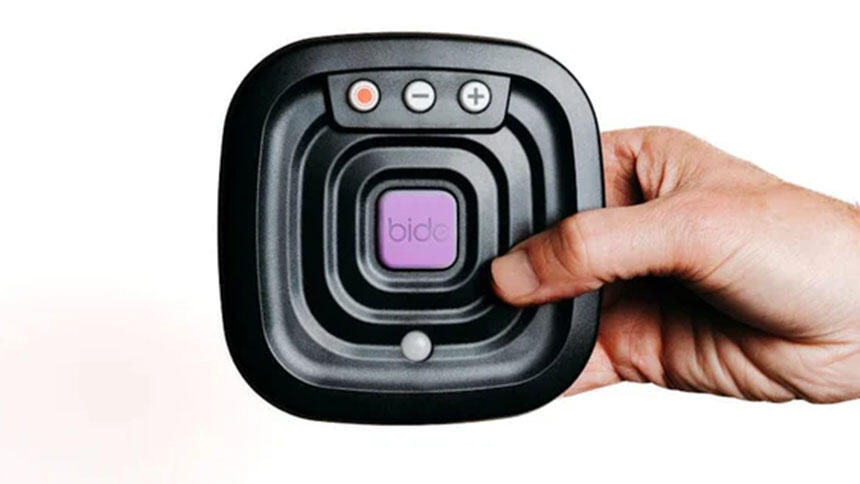
Bide fall prevention device
The group got a demonstration of how to record messages and use Bide. As with most assistive devices, how useful it is will depend on the person involved.
‘For example,’ said Sue, ‘it could be great for someone who’s living alone and gets disorientated in the mornings.’
For some people, Mike noted, ‘It could also cause confusion if someone hears a familiar voice on a recording and thinks they’re there.’
Group members agreed that it’s important to find the right place for the device, so it’s not repeatedly set off if someone’s moving in bed but not actually getting up.
‘It’s expensive,’ said Mike. ‘But if it could prevent a nasty fall, it’s obviously priceless.’
Prices (correct at February 2026):
- Plug-in sensor light – £14.99.
- ‘Get up in the night’ sensor light (battery-powered or new rechargeable version) – £16.99.
- Soothing sounds night light – £33.99.
- Wake & shake alarm clock – £59.99 (or £49.99 with VAT relief).
- Bide fall prevention device – £199.99 (or £166.66 with VAT relief).
You can buy the Wake and shake alarm clock and Bide fall prevention device VAT free if they’re for use by a person with dementia or other conditions. To save 20% on these and many other specially designed products, tick the box stating you’re eligible for VAT relief at checkout.
Making your home dementia friendly
Our Making your home dementia friendly (819) booklet provides many practical tips to make managing dementia at home easier.