

 Dementia Support Line
Real stories
People with dementia or mild cognitive impairment can find clinical trials using a new tool
A new online tool makes it easier for people with dementia or mild cognitive impairment to find clinical trials that they could join.
‘There is a gulf between what researchers might write about their work and how that appears to the “man in the street”,’ says Keith Aungiers in Newcastle.
Keith is one of many who have helped ensure the Clinical Trial Finder can bridge this gap. People with dementia or mild cognitive impairment can use this new online tool to find trials they could take part in.
Keith retired early aged 59 to look after his wife, who was later diagnosed with Alzheimer’s disease. He was her sole carer for five years before she moved into a care home.
‘Throughout my career, I was often involved in the start of things but never saw what happened to them in the end,’ says Keith.
With the Clinical Trial Finder, it’s actually great to see it out there and say well, I played a part in that.
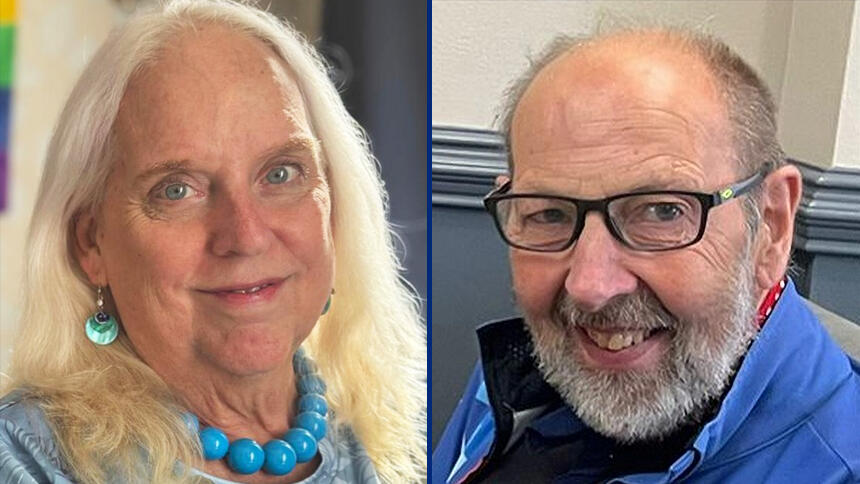
Dáithí and Keith
Safe and effective dementia treatments
Researchers need clinical trials to find out whether a new drug, device or approach is safe and effective to be used by people.
The Clinical Trial Finder makes it simple to explore ongoing trials and learn who is eligible to take part. It was developed as part of a broader partnership between Alzheimer’s Society and the UK Dementia Trials Network (UKDTN).
Through this, Alzheimer’s Society UKDTN Dementia Research Nurses are being introduced in up to 20 NHS sites across the UK. They are making it easier for all kinds of people affected by dementia to become aware of and get involved in research.
In a recent survey, over 90% of people told us that clinical trials and research should be discussed as a standard part of dementia treatment and care. However, few are given this opportunity.
Deborah McGlynn, Dementia Research Nurse in Glasgow, has seen the impact of dementia within her own family.
‘Clinical trials are how new treatments are discovered, and every single person who takes part helps move us one step closer,’ she says.
It isn’t about scientists in distant labs. It’s about ordinary people making an extraordinary difference.
Inês Rodrigues, Dementia Research Nurse in Southampton, adds, ‘I wish more people knew that taking part in research can be a meaningful part of their care journey.
‘Research is voluntary, but it’s also vital to improving diagnosis, treatment and support for people affected by dementia.’
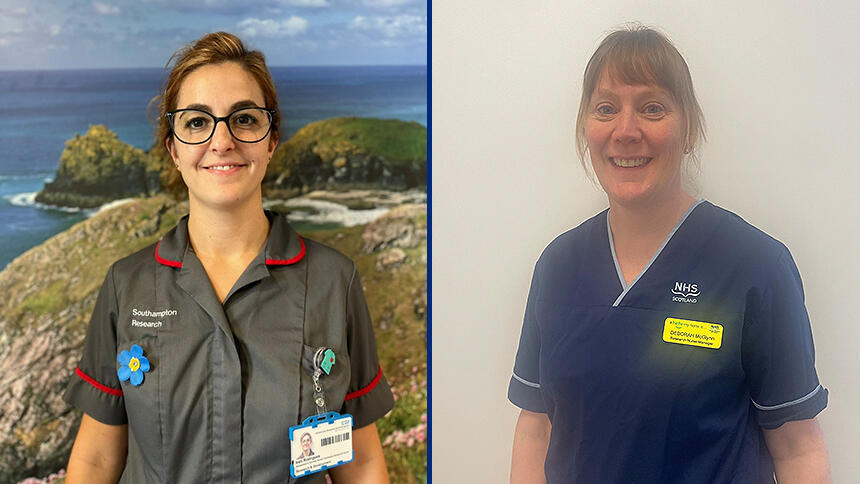
Inês and Deborah
Enormous potential for dementia trials
Improvements to the Clinical Trial Finder will continue and more trials will be added in the future.
Dáithí, who was also involved in helping to shape the development of the tool, says, ‘The potential for how impactful it can be is enormous.’
As a transgender, non-binary person with dementia, Dáithí was especially keen to make sure the tool is inclusive.
Dementia research needs people from all communities to take part.
This opportunity to be seen and heard as a whole person living with dementia, including my identity, was hugely important.
They raised the need for clear, plain English explanations of what each trial involves, including risks, benefits and time commitments up front.
Input from Dáithí, Keith and others all fed directly into how the Clinical Trial Finder was designed and refined.
‘I felt heard and listened to, it was really great,’ says Dáithí.
Deborah says, ‘Every study, every participant and every data point contributes to a future with better outcomes for people living with dementia.
‘That sense of shared purpose and progress is both motivating and deeply meaningful.’
Take part in dementia research
Research is only possible thanks to the people who participate. If you would like to get involved in dementia research, we can support you.