

 Dementia Support Line
Real stories
‘There is life during and after dementia,’ but carers need better support and a fairer deal
For Terry Byrne, his wife’s dementia has turned their lives upside down. He wants a lot more support for carers, many of whom are at breaking point.
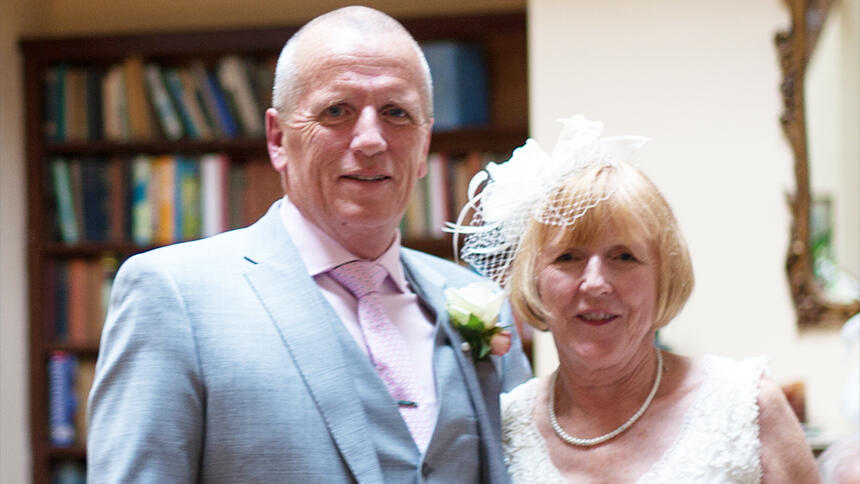
Terry Byrne was working part time as a fitness instructor when he met the love of his life across a crowded exercise hall.
‘I was going through a separation and Jen had lost her husband six months before,’ says Terry, from Christchurch in Dorset.
‘She used to come to my classes, and we got to know each other.
Eventually we started seeing each other. We just hit it off, and gradually sadness turned to happiness.’
As Terry, now 70, had a highly paid management role, the couple had a good life – going out for dinner every Friday and holidaying three times a year.
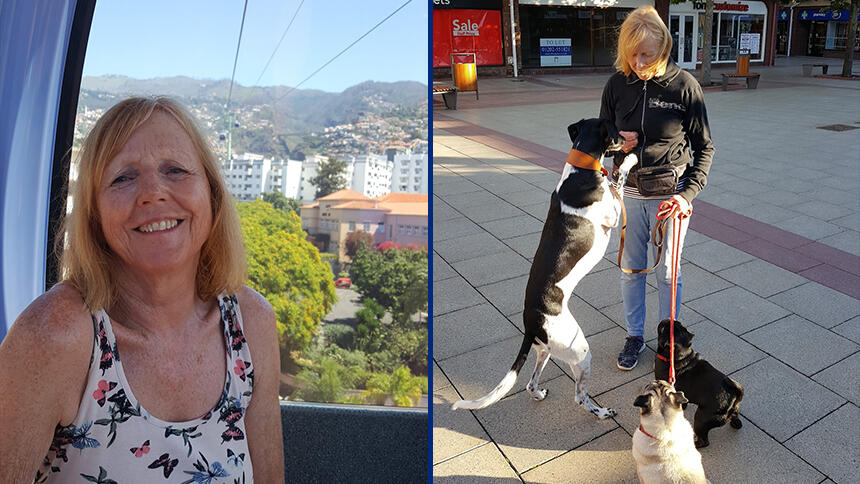
‘I loved going to the Caribbean, and persuaded Jen to give it a go. She was quite nervous about going as she’d never been so far from home,’ he says.
‘The first time she headed out there she loved it and after that we went every year. We also holidayed in Malta and Portugal.
We had a full life together. Jen was the love of my life and every moment we were devoted to each other.
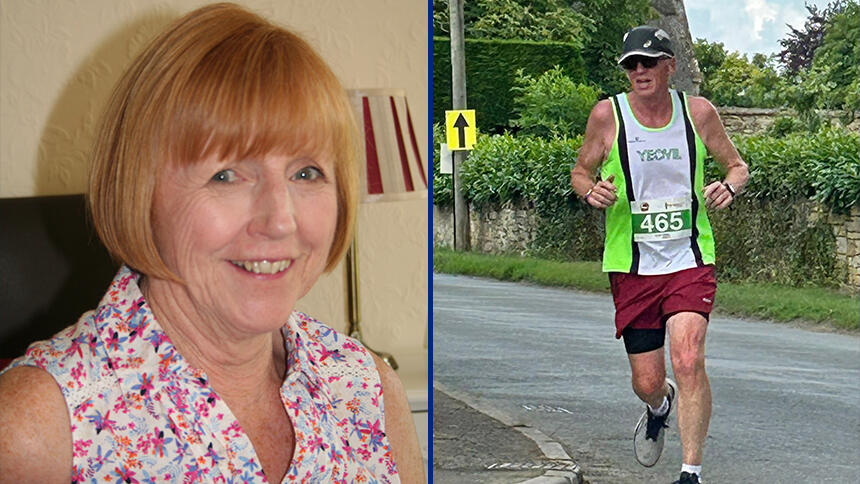
Jen was very special. She was a redhead and quite fiery. She didn’t suffer fools but was a lot of fun and I loved her to bits. I still do.
The first signs of dementia
The couple married in 2015 and, just three years later, Terry began to notice changes.
‘She was a dog groomer and started forgetting appointments. I knew things weren’t right and the clincher came when she locked herself out of the house with the dogs in the rain.’
After test results at the memory clinic, Jen was referred to a specialist who told her she had Alzheimer’s disease.
‘He was quite brutal about it,’ says Terry. ‘We went into denial but things went downhill from then on.’
Within a few months Terry realised he would have to give up his job as a regional sales manager, as it wasn’t safe to leave Jen alone. But the couple were unprepared for the impact on their finances.
‘My income reduced by a massive amount overnight,’ he says. ‘I was under retirement age so all we had to live on was £67 a week carers allowance, attendance allowance and two tiny pensions.
Luckily I had my severance pay, but it didn’t take long before it ran out. The social care system is a total disgrace.
‘To get attendance allowance you have to fill out a multipage complicated form. Luckily I was able to complete it, but my advice to any carer applying is to get help, talk to the Society or agencies such as Age UK.
‘The system makes you run through barbed wire to get anything but it just does not give enough.’
Series of mini strokes
After a series of mini strokes left Jen with reduced peripheral vision, she was also diagnosed with vascular dementia. This had a significant impact on her dementia symptoms.
Terry describes caring as a ‘24/7 job’. ‘People don’t realise what it’s like until they’ve done it. You don’t sleep, it is seven days a week and it is relentless.
‘As time went on, Jen started to show aggressive behaviour. She trashed the bedroom and threw a stool and bottles at me. She would do the toilet on the coffee table and wanted to be with me all the time.
‘Putting her to bed and her sleeping would give me some respite.
But, as she had no concept of time or when it was in the day, she would often get up, then I would turn around and she would be standing there.
Terry says he tried to carry on going on holiday, but it was so stressful they had to stop.
‘We went abroad for the last time eight years ago, but I spent the whole time terrified about losing her and what would happen if something happened to me. Jen could not cope alone.
‘I bought a camper van and thought we could go on holiday here instead. But it became more and more difficult, she was unable to be left while I did necessary tasks and was incapable of helping. I had no choice, I had to sell it.’
The physical impact of dementia
Terry says people often don’t realise that dementia has a physical impact.
He says Jen’s body was starting to shut down. She put on a lot of weight, as she would forget that she’d already eaten. Over the years she has lost control of her legs, she cannot feed herself and she is incontinent.
‘One of the hardest things about caring is the loneliness,’ he says. ‘Lots of friends and family disappeared off the face of the earth. People are frightened.’
What helped in the early days was being able to drop Jen off at a day care centre two or three times a week.
This carried on during Covid, as respite workers came to the house and meant that Terry could have a few hours to go running and decompress.
He says the Alzheimer’s Society dementia adviser was fantastic in the beginning, and a great source of information.
He adds that the support worker from the community mental health team (CMHT) was a ‘lifesaver’.
‘She cared for me as much as she did Jen. I don’t know what I would have done without her.
I would recommend getting in touch with your CMHT as early as possible after diagnosis.
On her advice, Terry requested a meeting to decide if moving into a care home would be in Jen’s – and his – best interest.
He desperately wanted to carry on caring for her at home but it was becoming too much – especially when lockdown meant there were no face-to-face visits.
‘Those extra six months I kept her at home were the worst of my life. One day I remember I ran to the window and screamed, “I can’t do this anymore!”’
Feelings of guilt as a carer
When Jen finally went into the home in 2021, Terry struggled with feelings of guilt.
When she became more aggressive, she was ‘sectioned’ and, after six months in a specialist dementia hospital, she was transferred to a specialist nursing home.
Terry says being ‘sectioned’ was a blessing, as it meant that specialists sorted out her medication and her nursing care was fully funded.
Although Jen hasn’t recognised Terry for the last two years, he still visits every day.
‘She is non-verbal, doubly incontinent and has lost the use of her legs, but I still love her,’ he says.
I know we are coming to the end of our journey and I know I will struggle when she’s gone as 90% of my life will disappear.
Although Terry has lost many of his friends from the past he has made new ones – fellow carers who understand – and he keeps sane through running.
‘I did 14 marathons when I was younger. I had a catastrophic injury and couldn’t run for four years but now I’m back and it is the only thing which clears my mind.’
When Jen went into the home Terry was able to go back to work but wanted something more flexible.
So he trained as a care assistant at a centre for people with learning disabilities.
Ultimately the role didn’t allow him to visit Jen as much as he liked but he says, ‘I loved it. It was the best year of my working life.’
Make space to breathe again
To better support Jen, Terry studied and read as much as he could about dementia. He put his knowledge to good use as an Alzheimer’s Society Companionship Service volunteer, making weekly calls to people going through a similar experience.
Every five or six weeks, Terry takes a break from visits.
‘Originally I felt so guilty not going, but I realised I needed it and I could breathe again,’ he says.
When Jen was newly diagnosed, the couple drew up lasting powers of attorney and redrafted their wills.
‘You should arrange these when your partner still has “competence”.’
Terry says stigma and lack of understanding can cause carers to withdraw. But he says the more people talk about dementia, the easier it will be.
He wrote poetry about the challenges of being a carer as an outlet, urging others, ‘Don’t be a shrinking violet. People hide from dementia, but it is important to share with the world so people can realise exactly what it’s like.’
He says, ‘Use dementia cafés and look into day centres, but most of all don’t be ashamed – ask for help.
Asking for help is a real strength – do it. Talk to other people caring for someone with dementia.
‘We understand, you only do that when you’ve lived it.
‘There is life during and after dementia.’