

 Dementia Support Line
Real stories
‘A friend in the house’: a personalised AI assistant for people with early-stage dementia to use with smart glasses
CrossSense has won the £1 million Longitude Prize on Dementia with an AI-powered assistant for smart glasses called Wispy.
Software designer Szczepan Orlins watched his grandmother struggle with her memory for years. CrossSense, the AI invention he helped create, may have made life easier for her.
Three of us in the team have family experience of dementia, and we wanted to create a meaningful innovation to help people stay independent longer.
The CrossSense journey started 11 years ago, when team members came across research showing the cognitive benefits of AI smart glasses. However, it took a long time for the technology to catch up.
‘When we first trialled smart glasses in 2019, we used goggles which fed back information from Wikipedia,’ says CrossSense Ltd CEO Szczepan. ‘But they were not intuitive and were very clunky.’
Seven years on, the invention now uses super-light glasses weighing just a few grams. After three years of trials involving 300 people with early-stage dementia, the AI companion called Wispy was born.
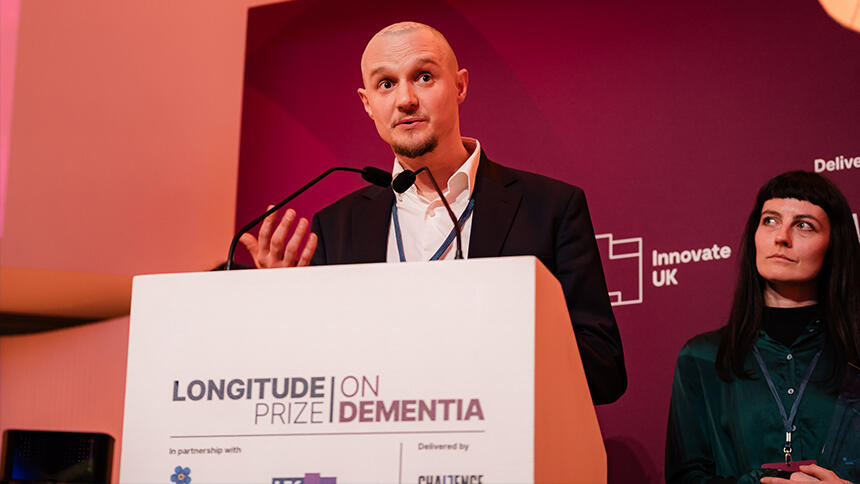
Szczepan accepting the Longitude Prize
An AI companion that helps around the home
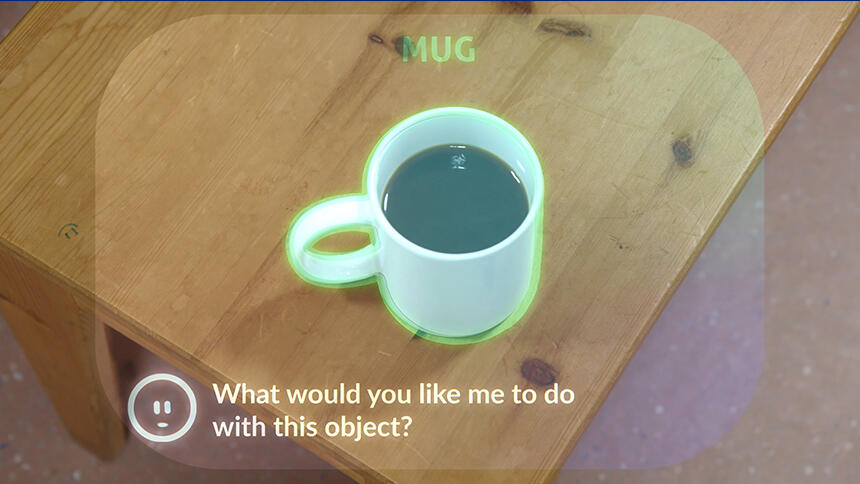
Wispy sees what the wearer sees, hears what they say and remembers how they like to do things.
For instance, the device will recognise a mug and remind the user of the steps to make a cup of tea. It may give verbal prompts when plants need watering and give reminders of appointments and when to take medication.
In trials, three out of four people reported a significant improvement in quality of life.
Szczepan says, ‘The product improves confidence and wellbeing, and has benefits for cognition and social bonds.
‘People who trialled it were dubious about how it would work, but they said it was an eye-opener how much simpler it was to use than smartphones and other devices they had tried.’
Winning the Longitude Prize
CrossSense beat 174 other inventions from around the world to bag the prestigious Longitude Prize on Dementia. The £1 million prize money will help bring this exciting product to market at the start of next year.
The glasses, which can incorporate hearing aids and prescription lenses, will cost £1,000 and there’s a £50 monthly fee to use the Wispy app.
The inventors hope that, as evidence emerges about its value, the invention will be picked up by the NHS and the social care sector.
Since it needs Wi-Fi, the product is currently designed for use at home.
However, there are hopes it may be used further afield in the future.
It is so intuitive that Szczepan predicts, ‘It could continue to be useful as the disease progresses and step up support as the AI learns more about what the user needs.’
Trying out the device with dementia
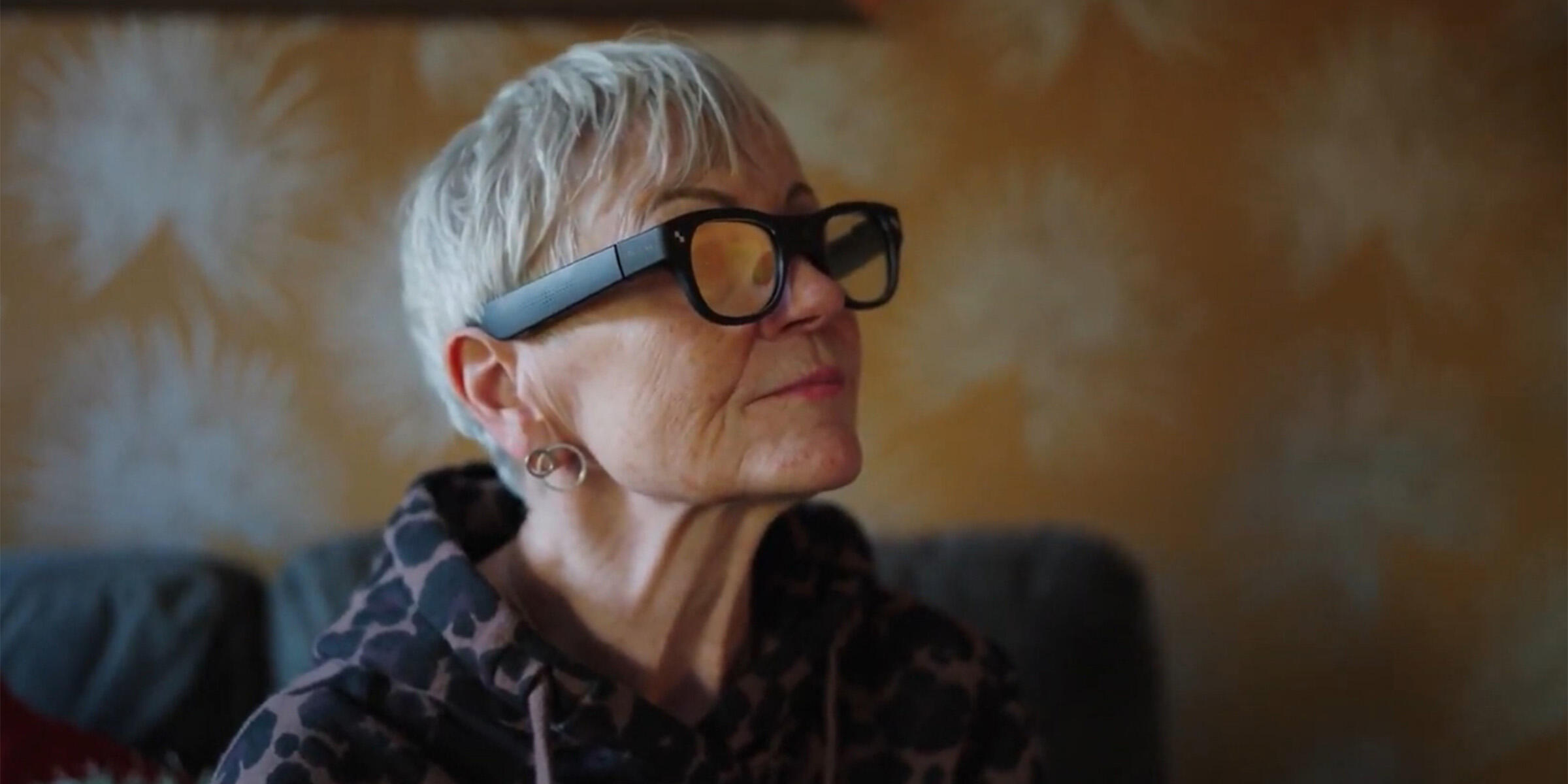
Carole Grieg, 70, from Sutton has Alzheimer’s disease and says she was ‘blown away’ when she trialled the device.
‘I am always looking for things that can help me with the challenges of dementia and I thought the glasses were very exciting.
As dementia progresses it can feel like descending into a chaotic world, but these glasses are like having a friend in the house which gives you support and helps you stay independent.
The glasses talk Carole through everyday tasks like cleaning her teeth and can answer questions like, ‘I would like to go out today. How is the weather?’
She was impressed to learn that there was scientific evidence that regular use of the glasses improved memory, and is excited about plans to adapt them for use outside the home.

A breakthrough product for dementia
Simon Lord, Head of Innovation at Alzheimer’s Society, describes CrossSense as ‘revolutionary’.
‘We are very excited by this breakthrough product. It helps people with dementia to engage in meaningful activities, which is important in staving off cognitive decline.’
He says the invention also supports carers by reducing their day-to-day involvement, allowing people with dementia to enjoy more quality time with their friends and family.
‘AI is an incredibly useful tool, and this product has the added benefit of cognitive stimulation and collaboration with the user, which we’ve never seen before.’
Carole says the ability of Wispy to learn about you as an individual and to speak with you sets it apart.
‘Dignity is very important. Wispy doesn’t spoon-feed you but gives you gentle encouragement and reminders to enhance your life,’ she says.
‘Putting these glasses on is like a moment of clarity and is like putting on a lightbulb.
‘It isn’t a cure, but when people live in confusion this is something which can give them hope.’
Find support near you
From activities and social groups to dementia-friendly transport, our dementia directory can help you find support services local to you.