

 Dementia Support Line

Real stories
Creating a care team and making sure they’re trained to support a person with dementia
Steven Lai, in West Sussex, is finding dementia care solutions in a disconnected system – including unlocking the benefits of Alzheimer’s Society training.
‘Finding someone to cook your mum a meal on a recruitment site is nigh on impossible, but it shouldn’t be that hard.’
So says Steven Lai, whose mission to create the right care team for his mother, Shing, including arranging dementia training.
His search didn’t just provide insights and solutions; it also led him to a new role helping others to navigate the intricacies of finding support.
Becoming a carer
Steven was three when his family moved from China to the UK, 50 years ago. Growing up in a small town in Hertfordshire, he studied photography at university and landed his first job in London.
Everything changed when his father died in 2009. Overnight, he took on the responsibility of becoming a carer for his mother.
‘My mum had a stroke in 2005, which affected the mobility on her left side. My father had cared for her, so when he passed away, it left a really big hole.
That was the start of my carer journey and a different life for me.
To be nearer his mum in Portsmouth, Steven moved to nearby Chichester. It was an upheaval from Surrey for him, his wife and young son, and Steven also found it much harder to find work.
‘I was an entrepreneurial professional and highly paid, but my work dried up after we moved, and I struggled to find a flexible role whilst caring for my mother.’
Steven says Carer’s allowance and Child Benefit far from covered the family’s bills. They were forced to drain their life savings just to get by.
The high financial cost of care is common among carers, but Steven didn’t feel he had any choice.
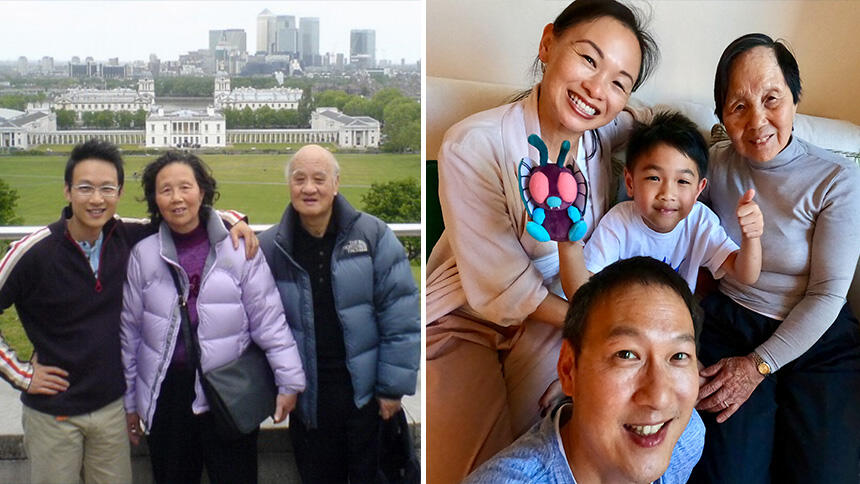
Steven and his family
In Chinese culture, we look after our parents. I knew I had to take on the responsibility for my mum.
‘My mum doesn’t speak any English and relied on my dad for everything, so she was in a difficult position.
‘She was living in a house which was too big for her, she couldn’t get up and down the stairs, and she was struggling with cooking and cleaning.’
Building a suitable care team
One of Steven’s greatest concerns for his mother was social isolation.
‘No one was coming to see her, and she was just living out her days.’
Trying to source a suitable care team was massively challenging – particularly as Steven was looking for carers who could speak Chinese.
‘My mother originally lived in Letchworth, which is a tiny place, so it was like trying to find a small number of fish in a very small pond.’
Steven had persuaded his mum, who is now 88, to move to Portsmouth, which has a sizeable Chinese community. But he still found it difficult to find the right people.
‘Adult services have a Personal Assistant Job Noticeboard, but it is like a dating site and there is no way of knowing whether someone is a good fit.
It is a broken system and just doesn’t work.
‘We had carers come and go,’ he admits. ‘We could find people who had the language but the passion for care wasn’t there.’
He says another issue was that members of the Chinese community often wanted to be paid cash in hand, but the local authority’s direct payments system required a contract.
‘What you need is not someone who is doing it for the money, but someone who genuinely wants to care and has lived experience.’
Steven was lucky enough to find Chinese-speaking carer Patricia Chau five years ago. Last September, he found the newest member of his care team, Carol Hazikyriakos, with the help of Portsmouth City Council.
Although Carol doesn’t speak Chinese, Steven says she communicates with Shing who knows basic words and uses a translation phone app.
And he says Carol’s passion for care and cooking delicious meals for his mother more than makes up for the language barrier.

Steven and his mother and her care team
Realising the care team needed more training
When Shing was diagnosed with vascular dementia last year, Steven realised he and his team needed upskilling. But he says it was challenging to find training.
He felt in-person training would allow them to ask their ‘burning questions’ about dementia, but the closest provider was in Stockport.
After some online detective work, Steven discovered that Alzheimer’s Society offers training to organisations, including care homes and agencies. So he phoned our training team.
Our training courses aren’t usually for individuals, but we said we could help if Steven found a venue and arranged funding.
Steven secured funding from Skills for Care, the workforce development body for adult social care in England.
He also found the Portsmouth Carers Centre, which kindly offered the use of a training room without charge for unpaid carers.
‘On top of finding funding and a venue, I had to find a time when everyone was available. It was a bit like herding cats!'
Life changing effects from the training
Steven’s efforts paid off. All three members of the care team found our training life changing in how they’re able to support Shing.
Steven says it was meaningful that the trainer had lived experience and shared what he would do in difficult situations.
Training has helped us to know how to approach challenging situations. We learnt to diffuse, distract and redirect.
‘For instance, after training, Patricia cooked a Chinese dessert and my mum asked if it tasted so good because she had cooked it in her Pyrex saucepan.
‘We’d given away those saucepans during her move but rather than distress her, Patricia said, “Oh auntie, Steven took those for safekeeping at his house.”’
Steven said the training was also a great chance for the team to get together.
‘We are normally “ships in the night” and never meet. So it was an opportunity to spend time together and get to know my team,’ he explains.
Steven says there are not enough agencies providing this kind of face-to-face training, but he thinks it would make a world of difference to carers.
Until it happens to you, you don’t know how you will react to dementia behaviours. The training made a huge difference to us all and now we are much stronger as a team.
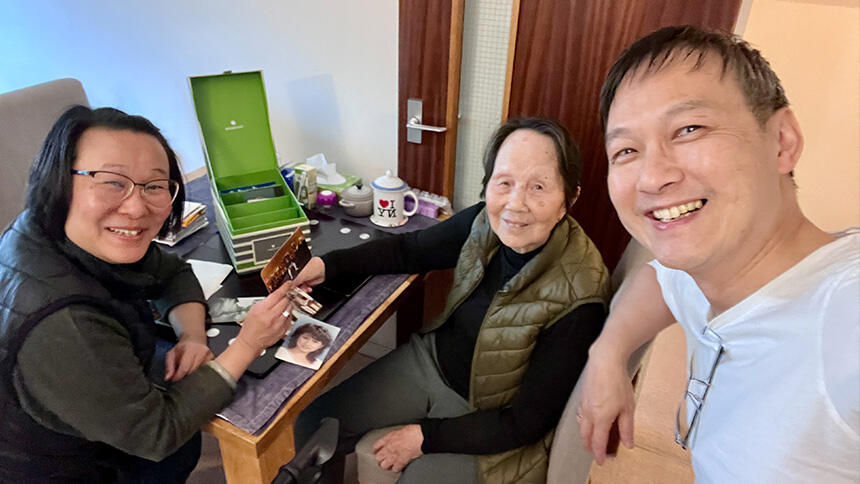
Steven, his mum and a carer
My superpower is lived experience
One unexpected outcome of his journey is that Steven was selected for a new role at Portsmouth City Council to build a local community of microproviders.
Microproviders are self-employed personal assistants – care workers who handle their own admin. This means that people looking for care don’t have to take on the burden of payroll, paperwork and other employment responsibilities.
Still relatively new and not available everywhere, this type of paid care provides greater choice over what support you receive, when and how you want it and who provides it.
It means you don’t have to choose between either going with an agency or becoming an employer yourself.
The new role is perfectly suited to Steven.
My superpower is lived experience. I spent six months navigating everything the hard way. I saw the potential and the amazing people out there who could help, but the system is disconnected and disparate.
If you can create a community where you can find people who genuinely want to help and who have the experience, passion and unique skill set, then you can achieve something truly amazing.
‘Finding a carer shouldn’t be this difficult – and that’s exactly what I’m determined to change.’