

 Dementia Support Line
Real stories
Keeping a positive mindset after a diagnosis of dementia with Lewy bodies
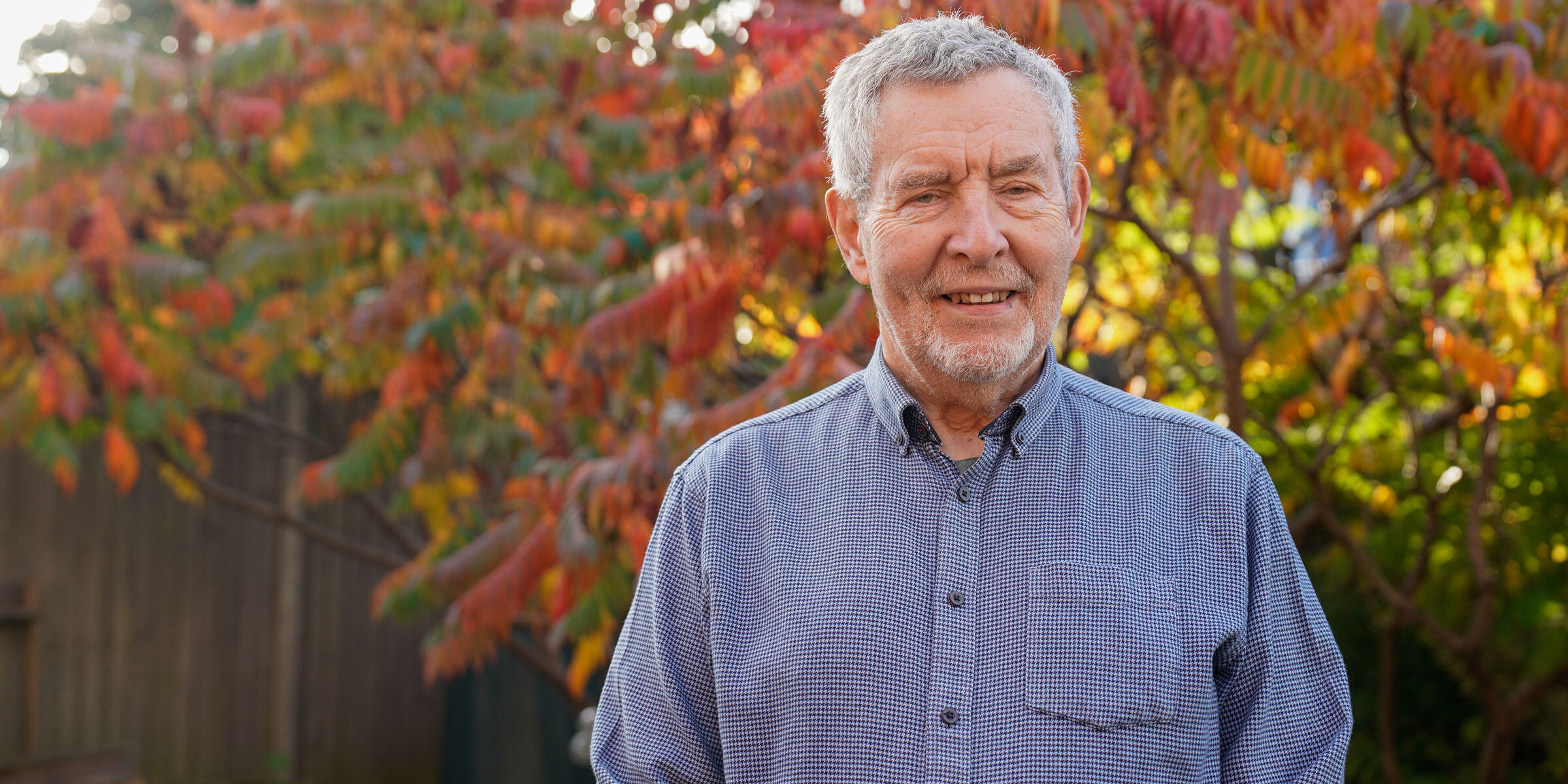
Ian Johns in Bristol has dementia with Lewy bodies. He and his wife draw on moments of joy and achievement and Ian says they have much to live for.
Anyone looking for ways to feel upbeat while living with dementia may have something to learn from Ian Johns.
At 82, he lives with his wife Jane, who’s a retired teacher. The couple describe what they call their ‘golden moments’ – times that feel like blessings and stop them giving in to difficult feelings.
Ian, who has dementia with Lewy bodies, says: ‘I would say without question, that having a positive mindset has worked for us – and we’ve done this together.’
‘It’s simple things,’ adds Jane. ‘When we’re out, it might cost a tenner, but we’ll have a coffee or go for lunch. We might have just spent a lot of money on a new Hoover, but we’re still going to have lunch out.’
Learning that time is precious
Ian knows why this way of living in the moment is so important to him, and it’s not just because of dementia.
When Ian was 26, his father died at 53 of a heart attack, with no warning. A tragedy that, 56 years on, still reminds him that the time we have is precious.
Ian grew up in Pontypool, South Wales, then a town reliant on heavy industry and coalmining. His mother was determined he would not be a miner.
Instead, Ian took an apprenticeship in electrical engineering and started a successful career, including 10 years at a local hospital.
‘Believe it or not, my job title was “exceptionally skilled electrician”,’ he laughs.
‘Only 10 or 12 of 2,000 electricians in the health service had “exceptionally skilled” status. It was because the hospital had its own generators and its own coal – quite a set up, and I felt like I was doing something positive.’
Ian also had an interest in lift engineering and moved to London for a new job. There he also found the love of his life.
I hit the jackpot and met Jane.
Ian's working and family life
Ian spent the rest of his working life driving from one broken-down lift to the next.
‘I’d be in north London, then Torquay, then Birmingham. Now faults can be fixed by pressing a button on a computer, but not then.’
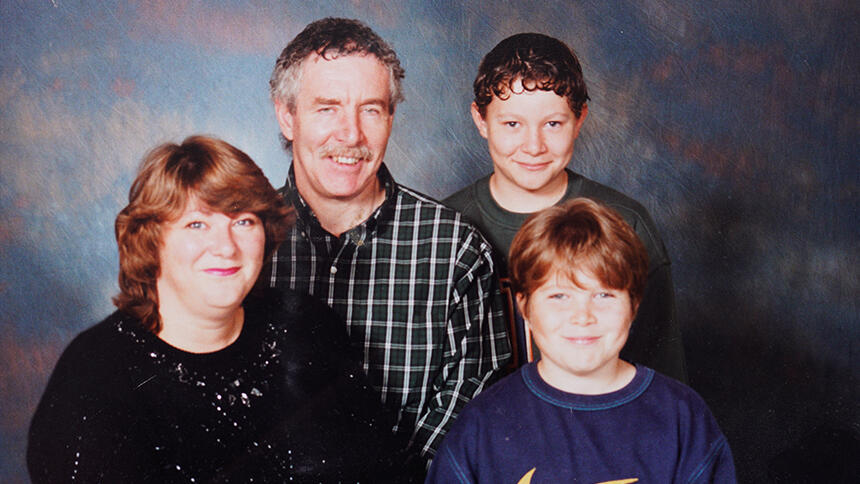
The couple moved to Bristol, and now have two sons and two granddaughters.
‘I never thought I’d see you with a crown on your head. Our eldest granddaughter’s properly into princesses,’ says Jane, who’s 68. ‘She loves the rough and tumble, too. We had great fun in the summer in the garden.’
When Ian’s own boys were young, he often saw them only at weekends.
I’d be gone at perhaps 6am and get home at 7.30pm. But when I could see them, we did a lot. We went to London and the Natural History Museum, the Tower of London, Imperial War Museum, the V&A...
Ian passed his love of rugby and love of music to his sons, one of whom is a bass guitarist.
‘When he was younger,’ says Ian. ‘I was his roadie, driving him to different venues, including Glastonbury and the Secret Garden Party.
‘Once we waited until 4am in an empty Tesco car park until we could pick him up, with the police keeping an eye on us.’
Jane adds: ‘You were always doing something for them. “Dad the electricity isn’t working”, “Dad my car’s not working”, “Dad I’ve got a puncture and the wheel won’t come off.” You turned up and sorted it out.’
‘I never hesitated,’ explains Ian. ‘Probably because I was an only child, and I had to look after myself. There wasn’t anyone to help me.
‘Obviously I wanted to keep the boys safe, so I didn’t see it as a burden.’
Struggles with memory
Ian has always been someone who can fix and mend. But then he noticed he couldn’t do everything he used to, and he struggled with his memory.
I’d put something down and couldn’t think where it was.
The couple put this down to age, but then saw that his reflexes when driving weren’t as sharp.
Next Ian suffered a psychotic episode, becoming obsessed with a minor financial issue to the extent that he became incoherent.
‘The hospital found a urinary infection and a respiratory infection,’ Jane reminds him.
‘You were having the most shocking hallucinations. You said I wasn’t your wife, I was an actress.
‘You turned into a shell of a man, shuffling along. I didn’t think I’d ever get you back.’
Ian was ‘sectioned’ twice: ‘I had two blocks of ECT treatment, one of 13, one of 14. It’s not nice to have.’
Being diagnosed with dementia with Lewy bodies
Their next struggle was to find out what was wrong with him.
The infections were long gone. Ian waited eight months for a brain scan. Two months after that, the doctor confirmed dementia with Lewy bodies.
‘When I first heard, it was just like hearing a number, I think because things happened so gradually,’ says Ian.
‘Since then, we’ve gone to various groups and seen people who are much worse off than me, and then it hits home.
When you’re young and healthy you think you’re indestructible. As you get older, this door shuts and another door shuts.
‘Other doors are still open, but it’s finding them. I’m fortunate because Jane is superb.’
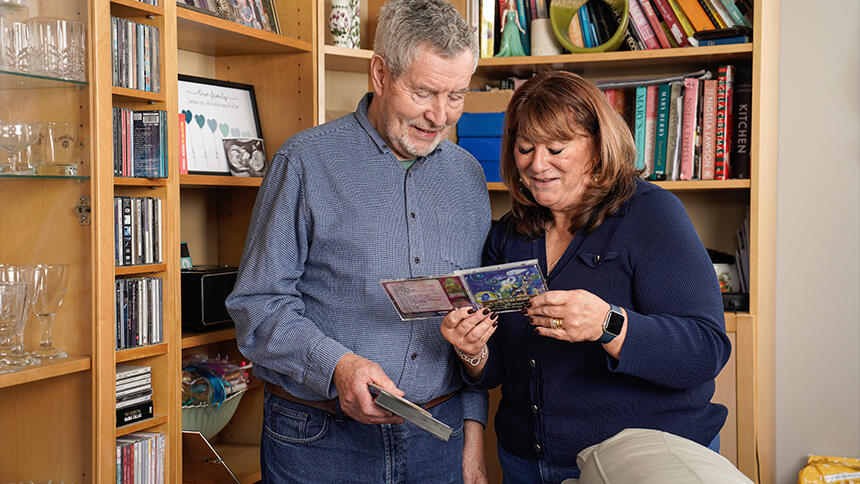
Jane says: ‘A day or two after the diagnosis, we agreed we were going to make the most of it. We would find things we could do.
‘We used to love going to the cinema. Now we watch films at home so we can pause them, and I can explain them. The other day we went to the cinema during the daytime when it wasn’t busy.’
Ian agrees, ‘You have to say, “Right, we are going to do this.”
‘Next weekend we’re going to a wellbeing gym to use some resistance machines.’
Living life one thing at a time
Some days the couple wake up and feel that there’s a mountain to climb. Then they do one thing at a time – brush their teeth, get dressed. Before they know it, they are into the day.
‘Then the black mood has lifted,’ says Jane, ‘just by changing your approach.’
‘It’s easy to say, “I’ll lay down for another 10 minutes,”’ says Ian, ‘Instead I cut the lawn, get up in the attic to put stuff up there...’
They have a daily planner for tasks that need to be done.
‘It keeps us ticking over,’ says Ian. ‘The hardest thing for me is not driving,’ he says. ‘I passed my test at 17 and I’ve driven in all different countries.
But you can never act as if life is over. If you have a family and they’re healthy, that’s all you can ask.
Ian and Jane have been helped by information on the Alzheimer’s Society website and links to local support groups.
They’re also involved in educating students, including mental health nurses, occupational therapists and physiotherapists, through Time for Dementia.
One example they use with students is how Ian is more confident about a train journey if he knows the layout of the carriage in advance, where they’ll sit, and where the doors and toilets are. Jane draws a map so he can orientate himself.
Similarly, a person with dementia might need to understand the layout of a consulting room.
Ian adds: ‘I’ve told them you’ve got to give us a second to process something. And don’t start shouting. We can hear, you know.’
A dementia diagnosis doesn't mean life is over
Ian is proud of his first-class lift repairs. He’s proud too of how he’s coping with dementia.
‘A lack of confidence is a heavy thing. You think, “Should I do this, or should I leave it for someone else?”
‘You have to have confidence and sometimes you need someone to help you. It takes longer to get there, but there’s no pressure.
We can never say, “We’ve got this diagnosis, life is over.” We look at our life and the positives and dismiss the negatives one by one. We have too much to live for.
How can you help?
Your donation helps us to support more people like Ian to remain as independent as possible.