

 Dementia Support Line
Real stories
People with dementia need support as soon as they’re diagnosed
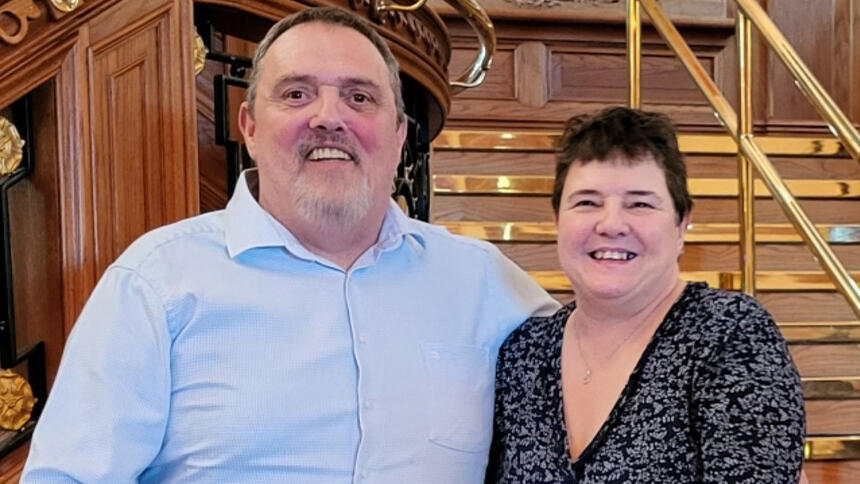
Julie and David Kerr, in County Antrim, want everyone to receive dementia support at the point of diagnosis.
Before lockdown, Julie was forgetting things – going to the wrong place, forgetting what she’d gone to the shops for, missing shifts at work.
Initially, it was put down to menopause and ageing. But we went back to the hospital for tests and scans and, in 2022, she received a diagnosis of early-onset dementia.
Julie’s mam had dementia, so we knew about the condition, but no way did we think she might have it too.
A life-changing dementia diagnosis
After giving Julie a diagnosis of dementia, the doctor stood up. We thought he was going to get us some support leaflets or invite someone in to speak with us.
He opened the door and said, ‘You’ll be able to find out more about it on the internet,’ then closed the door behind us. We just looked at each other and burst into tears.
You can’t give people a dementia diagnosis and tell them, ‘That’s it, away you go.’
Maybe he was having a bad day. But it was so wrong to deliver the news in this way, especially something so life changing as dementia.
Even if he’d handed us a leaflet, just simple gestures, we wouldn’t have left feeling so bad.
When David was diagnosed with heart disease, he was given a dedicated heart nurse after he was discharged from hospital.
Why isn’t there a similar approach with dementia?
Joining a dementia support group
For the first six months after that appointment, we were completely lost. We didn’t know what to do or where to go.
We were rock bottom and didn’t speak to anyone.
Then our daughter found a wee notice at our library about a local Dementia Northern Ireland support group for Julie – we thought it wouldn’t harm to give it a go.
Being among other people with dementia who understood everything we were going through was amazing.
From that day we got our lives back. It was like flicking a switch that day and just everything started.
But it shouldn’t have been up to us to find a way through on our own.
What needs to happen after a dementia diagnosis
When you receive your diagnosis, you should be given information on where to go and what to do next. All the better if it was delivered by someone who is trained.
You might not be ready to act on what they tell you – everyone’s different – but at least the option is there.
You shouldn’t have to look for support yourself.
It’s such a difficult time, you don’t always have strength. When Julie finally found support, it transformed everything.
It gave her the confidence to speak to her boss, to stay active and even to go back to her doctor about the side effects she was getting
with her medication.
Without it, she’d be stuck at home watching TV like her mam.
Now we are taking part in Time for Dementia, where we speak with healthcare students so they have more understanding of dementia.
By speaking about our experiences, we hope to make a small change in the way they might deal with dementia patients in the future. If we can help one person have a better journey than us, it’s worthwhile.
Find support near you
From activities and social groups to dementia-friendly transport, our dementia directory can help you find support services local to you.