

 Dementia Support Line
Dementia risk and prevention
There are many ways to reduce your risk of dementia. For some people, these changes could mean living longer without symptoms. For others, it could mean never having dementia at all. It’s about giving yourself more time to live with better brain health.
What are the main risk factors for dementia?
There are different types of risks. Some are fixed or unavoidable, like getting older. But others can be improved by making positive changes to your health and lifestyle.
The most important dementia risk factors are older age, genes and biological sex, with women having a higher lifetime risk than men. These can’t be changed, which means everyone has at least some risk of dementia as they get older.
However, there are still lots of risk factors that can be changed. Reducing these as much as possible, could help you to live longer without dementia.
Risks that often can be changed
- Health conditions – Some long-term medical conditions, such as high blood pressure, diabetes, obesity, high LDL cholesterol, hearing and vision loss, traumatic brain injury and depression may cause damage to the brain. Avoiding or managing these conditions better can reduce the risk of dementia.
- Lifestyle factors – There's a lot of evidence that our lifestyles and regular habits affect our brain health. For example, smoking or drinking too much alcohol actively damages the brain, whereas exercise helps to keep it healthy.
- Education and lifelong mental stimulation – Staying mentally active helps to build a stronger brain that can better cope with the effects of brain disease as we get older. This is sometimes known as building ‘cognitive reserve’.
- Environment – Exposure to air pollution caused by burning fuels increases the risk of dementia.
These are the most important risk factors for dementia that we can change. We recommend focusing on these as a way to reduce your dementia risk.
How to reduce your risk of dementia
Many of us have habits we could change to reduce our risk of dementia.
Some are easier to change than others. Start with the changes that feel most achievable for you.
Move your body more
Regular physical activity is one of the best ways to reduce your risk of dementia. It keeps your heart and blood vessels working well, helps you to keep a healthy weight, and improves mood and sleep. It also reduces your risk of diabetes and high blood pressure.
It can be helpful to make small changes first, and gradually build on them. Set yourself specific, regular goals that you can stick to – for example, going to a local Pilates or tai chi once a week.
Coordinating exercise with other people can make it more enjoyable and encourage you to keep going.
- Learn more about physical activity and dementia risk
For more information and support on getting active, visit NHS Better Health.
Drink less alcohol
Regularly drinking too much alcohol damages the brain and increases your risk of dementia.
If you drink alcohol, try to do so within the recommended limits – no more than 14 units of alcohol a week on a regular basis. If you’re in the habit of drinking every day, try to take some days off each week.
People who drink very heavily for several years may also be at risk of alcohol-related brain damage (ARBD)This is a type of brain injury that causes symptoms similar to dementia.
- Learn more about alcohol consumption and dementia risk
For more information and support on cutting down your drinking, visit NHS Better Health.
Don't smoke
Most people know already that smoking is bad for you. It’s bad for your brain, as smoking hardens the blood vessels. It also speeds up the ageing processes that drive brain disease as you get older.
If you smoke, it’s never too late to quit. If you don’t smoke, it’s best not to start.
- Learn more about smoking and dementia risk
For more information and support, get in touch with your local NHS Stop Smoking service.
Look after your mental health
Living with poor mental health can affect your physical health and wellbeing too, including your brain health. People who have experienced depression have a higher risk of dementia later in life. Unlike most other risk factors, it’s not yet clear how this works.
- Learn more about depression and dementia risk
If you feel you might be depressed, seek help early. Don’t wait until you’re struggling to cope. If you often feel low, anxious or irritable, talk to your GP, visit NHS Mental Health, or get in touch with a mental health support charity like Mind.
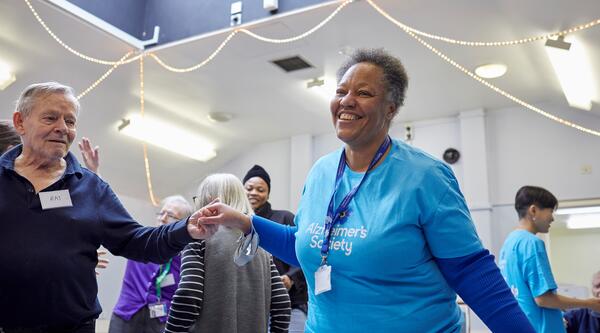
Maintain social connections
Social activity is a great way to practise using your brain, especially in older age. It builds resilience to the effects of disease and promotes better mental health too.
If you’re struggling to maintain social connections, look for local opportunities to meet people, such as hobbies, art or educational groups. You could also try volunteering or befriending services.
- Learn more about the social isolation and dementia risk
Keep mentally active
Doing activities that build and maintain thinking skills can help to delay the symptoms of dementia. The most effective way of doing this is by making sure that children get a full education. This develops a broad range of thinking skills, which can help you to stay mentally active during adulthood. (We have also included education as a factor in our information on risks you can't control.)
You can still build thinking skills by doing regular, enjoyable activities that test you mentally. Keep learning and practising new skills, either for work or on your own time. For example, learn to cook, play a musical instrument or do any kind of reading or writing, including listening to audiobooks.
Even better is to combine being mentally, physically and socially active by doing activities that involve moving, thinking and interacting with other people. Most team sports involve all three, or you can also try activities like dancing or orienteering too.
A lot of people are interested in puzzles and ‘brain training’ as a way to keep themselves mentally active, especially as they get older. Puzzles are a great way to maintain a range of thinking skills, but there’s not much convincing evidence yet that they have any special effect against dementia compared to other activities.
The main thing is to keep stretching yourself, always learning and developing – no matter how old you are.
Look after your health
Certain health conditions increase the risk of dementia, such as high blood pressure, obesity (being very overweight), high cholesterol and diabetes.
A healthy lifestyle can help to prevent these conditions, but it’s also important to catch them before you start to experience symptoms. If you book a health check with your GP practice, they can measure your blood pressure and weight, check your cholesterol level, and test your blood for the early signs of diabetes. It’s easier to manage these conditions if you catch them early, and it’s much better for reducing your dementia risk too.
Learn more about:
- Obesity and dementia risk
- Cholesterol and dementia risk
- Diabetes and dementia risk
- High blood pressure and dementia risk
Protect your hearing and vision
People with age-related sensory loss have a higher risk of dementia. This includes hearing loss and poor vision that’s not corrected with lenses or treatment.
There is a small amount of evidence that treating hearing loss with hearing aids or implants may help to reduce dementia risk. In the meantime, the best way to reduce this risk is to prevent hearing loss in the first place – for example, by listening to music safely or using the right ear protection at work.
Poor vision is a particularly important risk factor for older people. It’s recommended to have an eye test at least once every two years. This can check for early signs of age-related eye conditions like cataracts, as well as making sure that prescription lenses are up to date. Most people over 60 years of age can get a free NHS-funded eye test.
- Learn more about hearing loss as a risk factor for dementia,
- and the risk associated with vision loss.
Protect your head
A sudden blow or jolt to the head can sometimes have long-term consequences if it causes a traumatic brain injury (TBI), particularly it is severe or happens several times or more. Such injuries can leave you with a higher risk of developing dementia.
If you take part in activities that involve a risk of falls, collisions or blows to the head, take steps to reduce your risk of head injury. Protect yourself with headgear where appropriate and seek medical advice after a head injury or suspected concussion.
- Learn more about head injury, sport and dementia risk
Environmental risk factors
Air pollution caused by burning fuels contains tiny particles that increase a person’s risk of dementia. Although there are things we can do as individuals to reduce our exposure, such as ensuring kitchens with gas cookers are well ventilated and wood-burners regularly serviced, the most effective solution is to promote cleaner air policies, especially in towns and cities.
- Learn more about air pollution and dementia risk
Get enough sleep
People who consistently sleep poorly have a higher risk of dementia. There are many different type of sleep problems and not all of them contribute to dementia. Obstructive sleep apnoea, where you stop breathing at night for short periods, is probably the sleep disorder with the strongest evidence of increased dementia risk.
Simple changes can often help, such as sticking to a regular routine for sleeping and eating meals, creating a better sleep environment at night, and being physically active during the day. People who have sleep apnoea may benefit from a machine that helps them to breathe more easily at night. Talk to your GP if you’re having problems sleeping.
- Learn more about how poor sleep may increase the risk of dementia
Risk factors you can't change
This page is about the dementia risk factors that you cannot control, or that can be difficult to control as an individual. These are useful to know about if you want to understand your dementia risk better.
Dementia: Reducing your risk
- You are here: Dementia risk and prevention
- High blood pressure and the risk of dementia
- Cholesterol and the risk of dementia
- Obesity and dementia risk
- Diabetes and the risk of dementia
- Depression and dementia risk
- Head injury, sport and the risk of dementia
- Vision loss and the risk of dementia
- Hearing loss and the risk of dementia
- Smoking and the risk of dementia
- Alcohol and the risk of dementia
- Physical activity and the risk of dementia
- Social isolation and dementia risk
- Sleep and the risk of dementia
- Air pollution and the risk of dementia